 Image 1 of 2
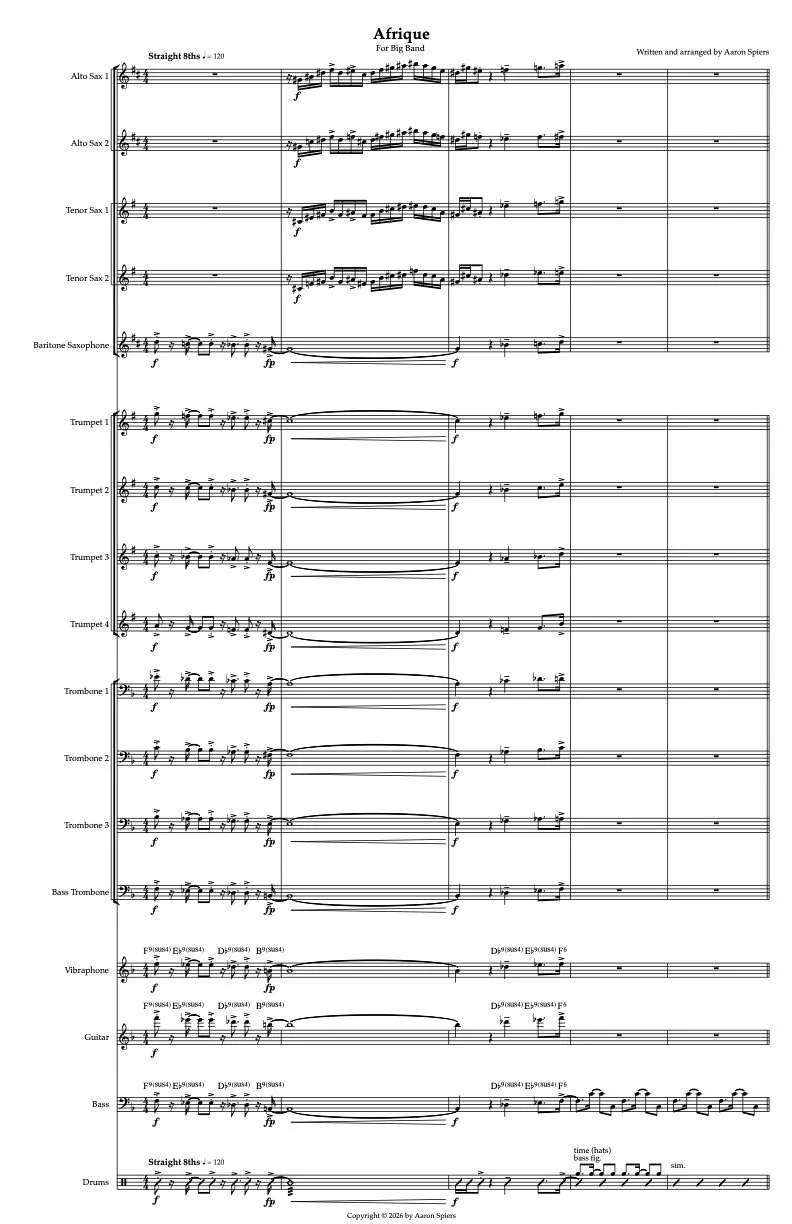 Image 2 of 2
Afrique is a contemporary jazz orchestra work that blends the rhythmic drive of jazz fusion with the infectious energy of Brazilian-inspired grooves. Originally conceived as a small group composition before being reimagined for large ensemble, the arrangement explores the expanded colours and dynamic possibilities of the modern jazz orchestra while placing the rhythm section firmly at the centre of the musical narrative.
The work follows a broad concert form of Intro, Head, Guitar Solo, Electric Bass Solo, Instrumental Breakdown, Head Out, and Drum Feature Finale. Throughout the arrangement, the melodic material is primarily entrusted to the saxophone section before passing organically through the brass, creating continual shifts in texture and orchestral colour.
The rhythm section serves as the driving force behind the composition. The electric bass part, influenced by the vocabulary and rhythmic language of Jaco Pastorius, provides an active contrapuntal foundation that interacts closely with the drums and guitar. Rather than functioning solely as accompaniment, the rhythm section operates as an equal voice within the ensemble, shaping the momentum and character of the work.
The orchestration contrasts intricate saxophone writing, layered brass voicings, and chamber-like horn passages with powerful full-ensemble statements. Following the improvised solo sections, an instrumental breakdown temporarily removes the rhythm section, allowing the horns to restate and develop the thematic material before the groove returns for the final build.
The closing drum feature is constructed around a recurring rhythmic motif that gradually expands through orchestral layering, culminating in a full-ensemble conclusion that highlights the collective energy of the jazz orchestra.
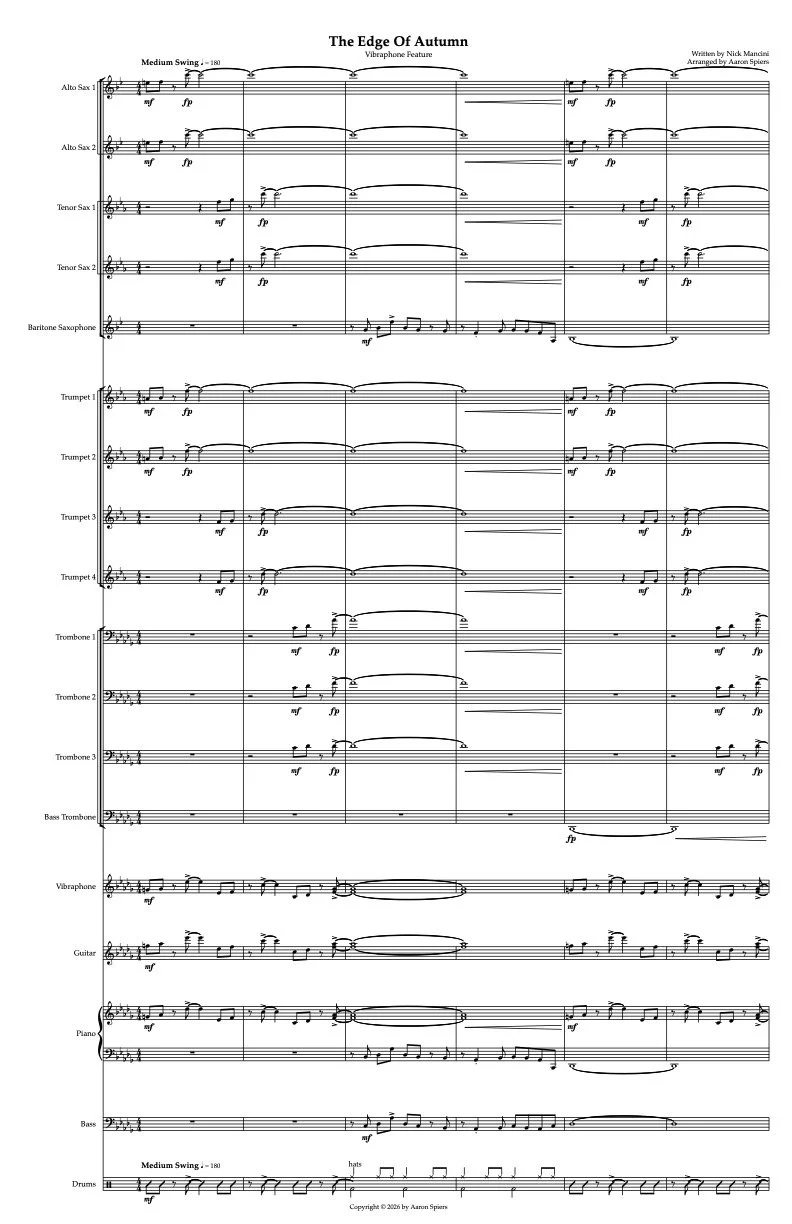
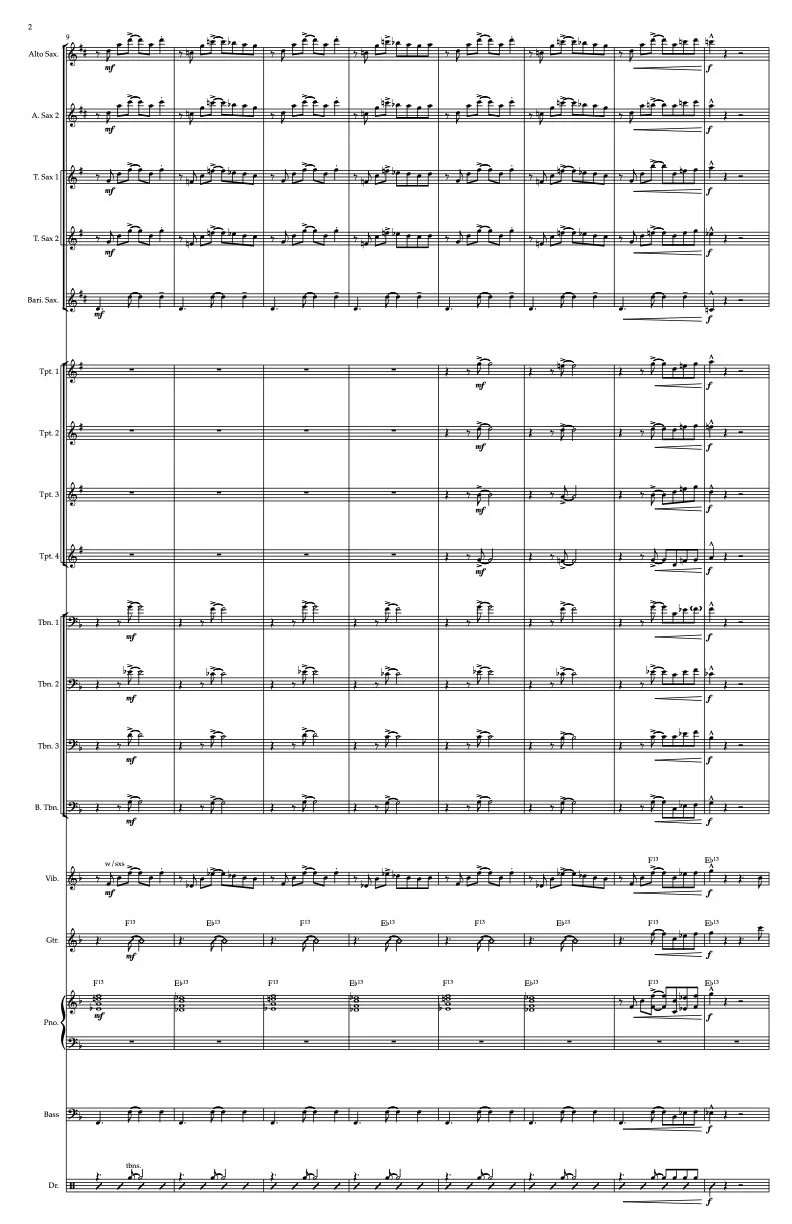
This study score demonstrates contemporary approaches to large ensemble orchestration, fusion-influenced rhythm section writing, sectional contrast, and long-form pacing. It illustrates how groove, texture, and orchestration can function as primary compositional devices while balancing opportunities for improvisation with carefully developed ensemble writing.
Afrique is a contemporary jazz orchestra work that blends the rhythmic drive of jazz fusion with the infectious energy of Brazilian-inspired grooves. Originally conceived as a small group composition before being reimagined for large ensemble, the arrangement explores the expanded colours and dynamic possibilities of the modern jazz orchestra while placing the rhythm section firmly at the centre of the musical narrative.
The work follows a broad concert form of Intro, Head, Guitar Solo, Electric Bass Solo, Instrumental Breakdown, Head Out, and Drum Feature Finale. Throughout the arrangement, the melodic material is primarily entrusted to the saxophone section before passing organically through the brass, creating continual shifts in texture and orchestral colour.
The rhythm section serves as the driving force behind the composition. The electric bass part, influenced by the vocabulary and rhythmic language of Jaco Pastorius, provides an active contrapuntal foundation that interacts closely with the drums and guitar. Rather than functioning solely as accompaniment, the rhythm section operates as an equal voice within the ensemble, shaping the momentum and character of the work.
The orchestration contrasts intricate saxophone writing, layered brass voicings, and chamber-like horn passages with powerful full-ensemble statements. Following the improvised solo sections, an instrumental breakdown temporarily removes the rhythm section, allowing the horns to restate and develop the thematic material before the groove returns for the final build.
The closing drum feature is constructed around a recurring rhythmic motif that gradually expands through orchestral layering, culminating in a full-ensemble conclusion that highlights the collective energy of the jazz orchestra.
This study score demonstrates contemporary approaches to large ensemble orchestration, fusion-influenced rhythm section writing, sectional contrast, and long-form pacing. It illustrates how groove, texture, and orchestration can function as primary compositional devices while balancing opportunities for improvisation with carefully developed ensemble writing.