 Image 1 of 2
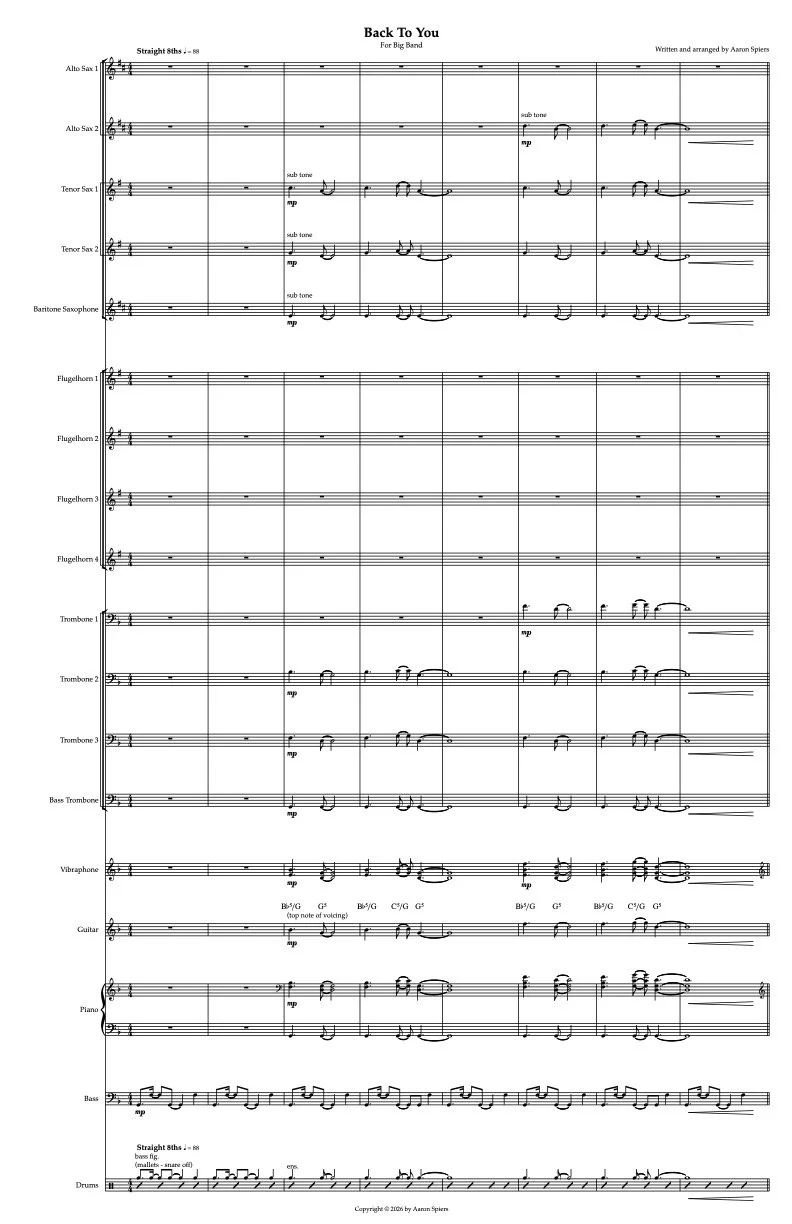 Image 2 of 2
Drawing inspiration from the orchestral textures and harmonic language of Maria Schneider, Back to You is a contemporary jazz orchestra work that explores atmosphere, colour, and melodic simplicity through expansive orchestration. Built around suspended harmonies, modal sonorities, and a repeating bass ostinato, the composition demonstrates how restraint and carefully shaped ensemble writing can create emotional depth without relying on harmonic density or technical complexity.
The work follows a concise form of Intro, Head, Solo, Ensemble Soli, Head Out, and Outro. The opening melody is shared between Tenor Saxophone 1 and Flugelhorn 2, floating above sustained harmonic textures before gradually expanding into richer orchestral colours. Throughout the piece, the melody is allowed to breathe, with each section of the ensemble contributing subtle changes in texture rather than dramatic shifts in intensity.
The improvised solo is set within a modal harmonic framework that encourages melodic development, space, and interaction with the accompanying ensemble. Rather than outlining rapidly changing chord progressions, the solo section invites the performer to explore shape, colour, and lyricism while maintaining the reflective character of the work.
Following the solo, the ensemble soli develops the thematic material through a series of constant-structure voicings, moving primarily within the sound world of G Dorian before naturally resolving back to the final statement of the melody. The writing emphasizes voice leading, transparency, and orchestral blend, allowing harmonic colour to emerge from the movement of individual lines rather than dense vertical sonorities.
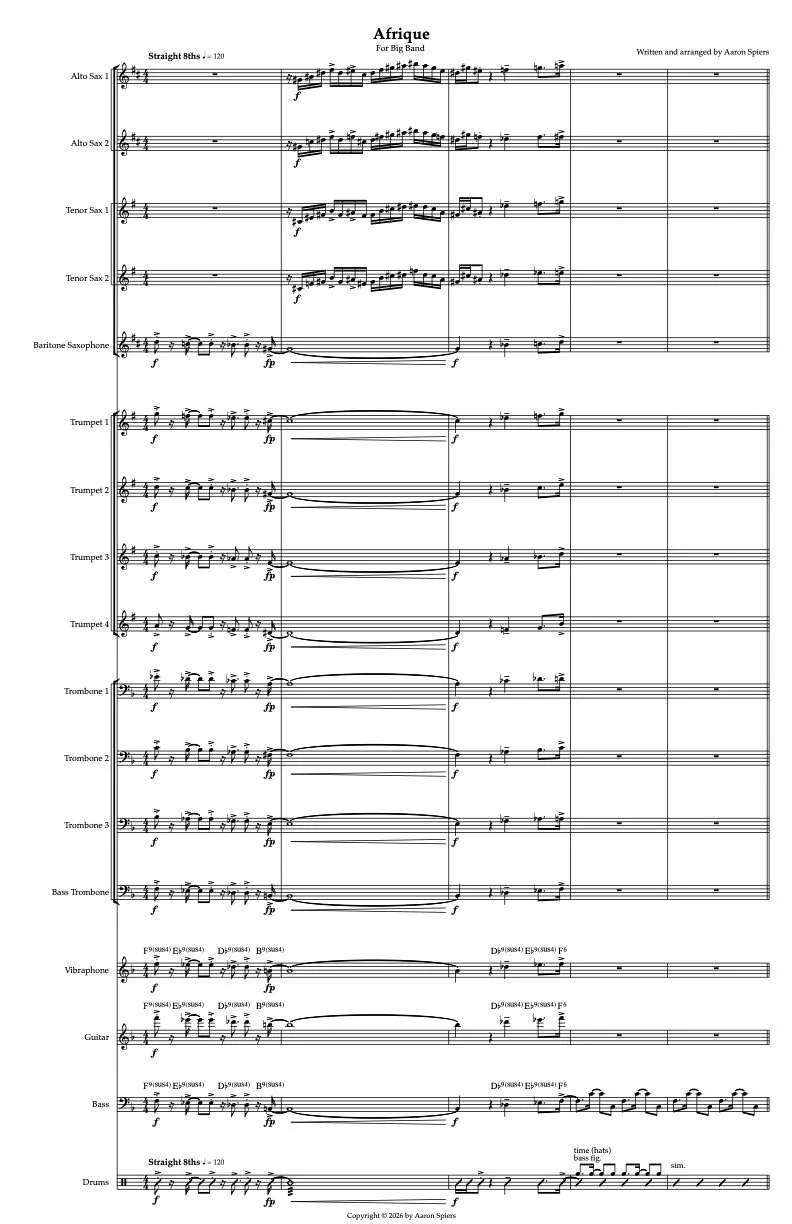
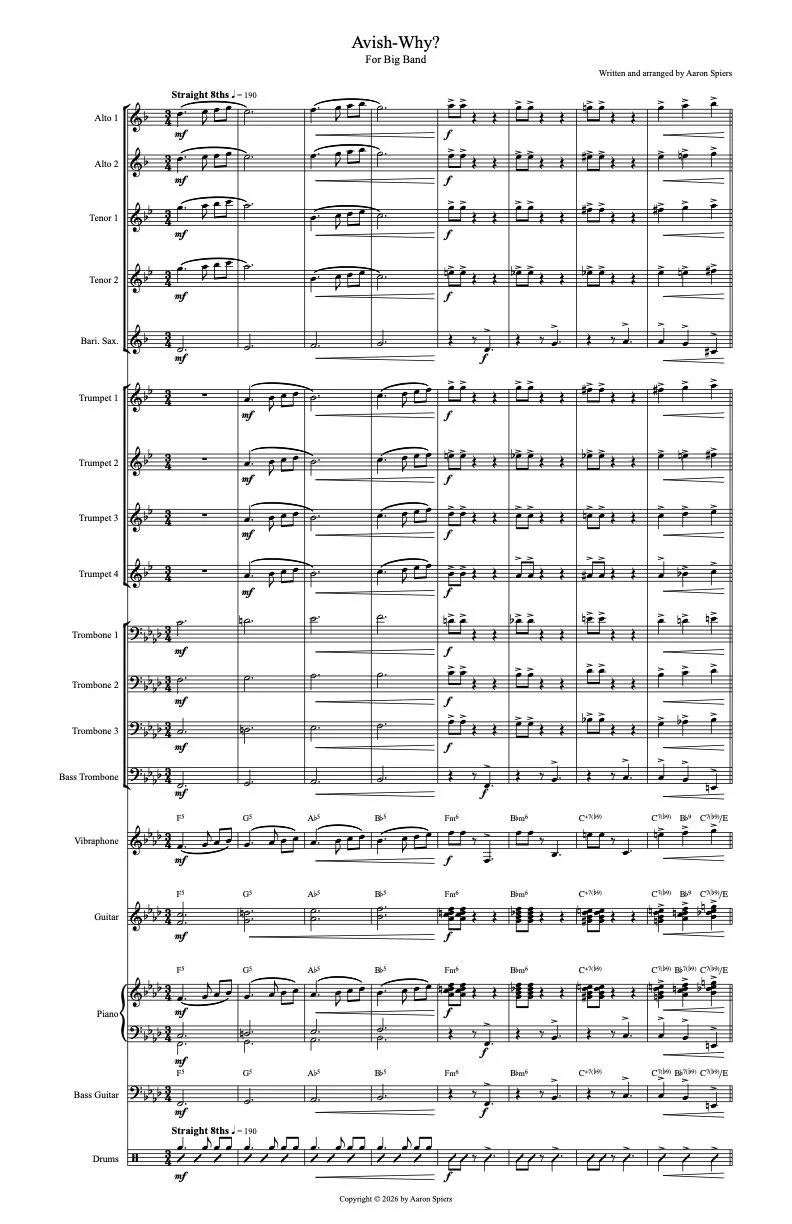
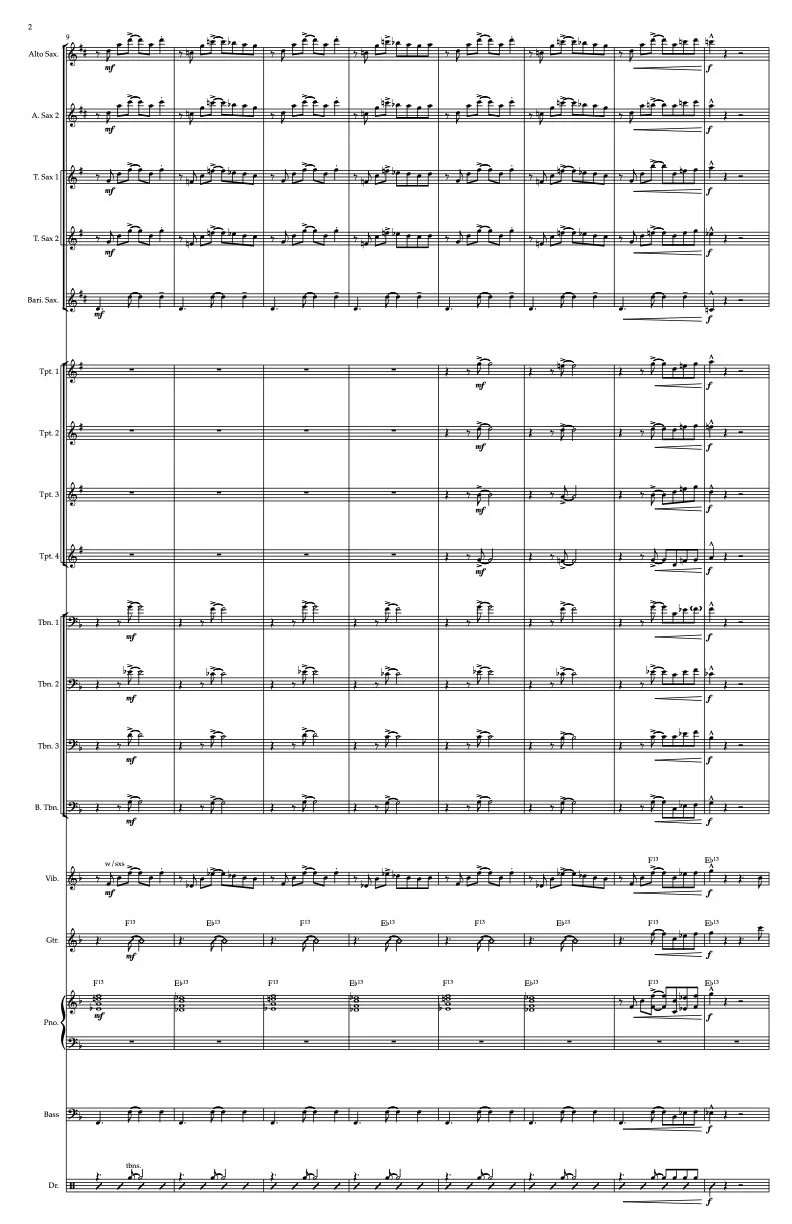
This study score provides insight into contemporary jazz orchestra orchestration, modal composition, suspended harmonic language, and the use of texture as a primary compositional device. It demonstrates how limited musical material can be developed through orchestration, pacing, and dynamic contrast, offering an example of large ensemble writing in which atmosphere and ensemble colour are central to the musical narrative.
Drawing inspiration from the orchestral textures and harmonic language of Maria Schneider, Back to You is a contemporary jazz orchestra work that explores atmosphere, colour, and melodic simplicity through expansive orchestration. Built around suspended harmonies, modal sonorities, and a repeating bass ostinato, the composition demonstrates how restraint and carefully shaped ensemble writing can create emotional depth without relying on harmonic density or technical complexity.
The work follows a concise form of Intro, Head, Solo, Ensemble Soli, Head Out, and Outro. The opening melody is shared between Tenor Saxophone 1 and Flugelhorn 2, floating above sustained harmonic textures before gradually expanding into richer orchestral colours. Throughout the piece, the melody is allowed to breathe, with each section of the ensemble contributing subtle changes in texture rather than dramatic shifts in intensity.
The improvised solo is set within a modal harmonic framework that encourages melodic development, space, and interaction with the accompanying ensemble. Rather than outlining rapidly changing chord progressions, the solo section invites the performer to explore shape, colour, and lyricism while maintaining the reflective character of the work.
Following the solo, the ensemble soli develops the thematic material through a series of constant-structure voicings, moving primarily within the sound world of G Dorian before naturally resolving back to the final statement of the melody. The writing emphasizes voice leading, transparency, and orchestral blend, allowing harmonic colour to emerge from the movement of individual lines rather than dense vertical sonorities.
This study score provides insight into contemporary jazz orchestra orchestration, modal composition, suspended harmonic language, and the use of texture as a primary compositional device. It demonstrates how limited musical material can be developed through orchestration, pacing, and dynamic contrast, offering an example of large ensemble writing in which atmosphere and ensemble colour are central to the musical narrative.