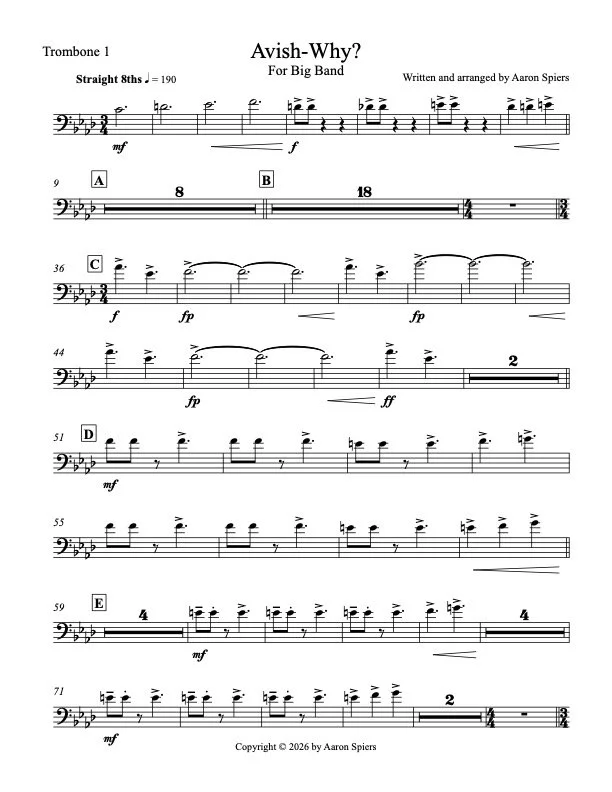
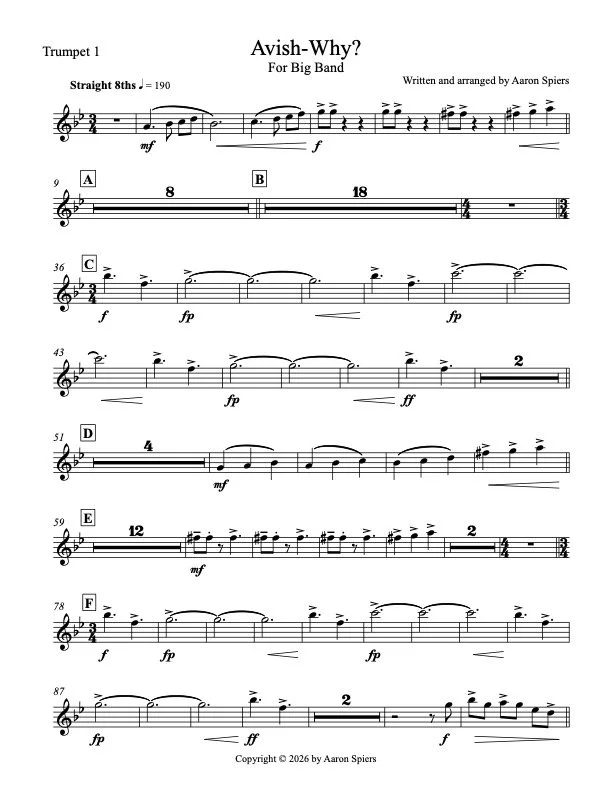
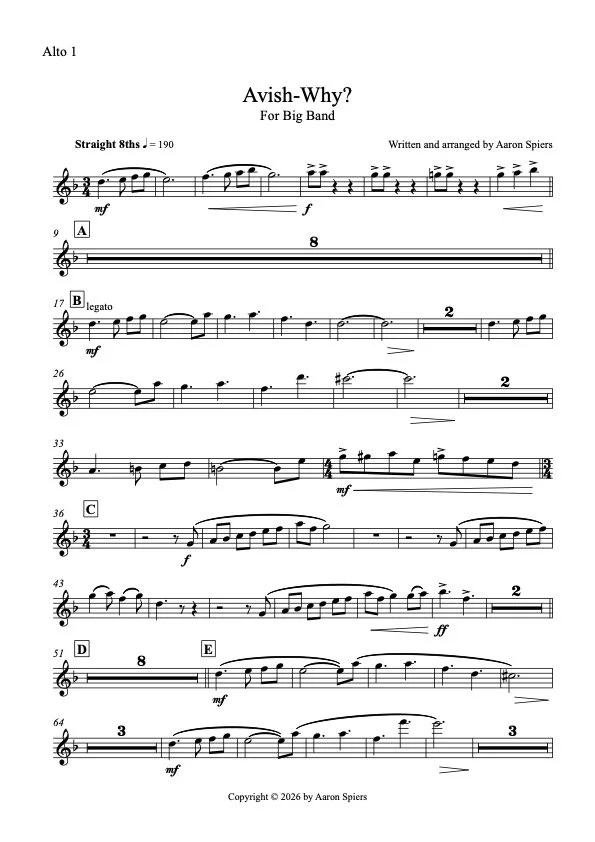
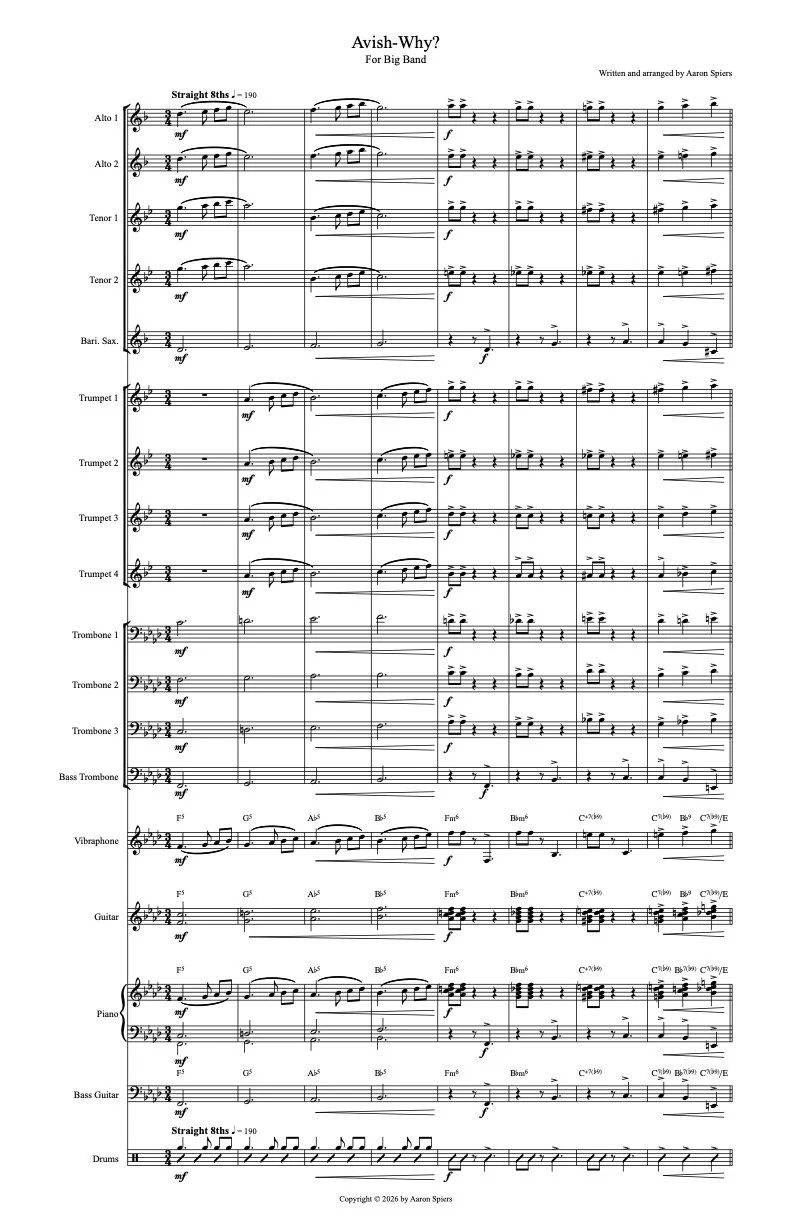
Length: Approx. 6:12
Tempo: ♩ = 100
Style: Swing Waltz
Key: A♭ Major
Difficulty: Grade 3–4
Lead Trumpet Range: B♮ (written) above the staff
Featured Soloist: Tenor Saxophone 1 (recommended to perform the solo from within the section, as ensemble passages occur during the feature)
Instrumentation: Standard Big Band (no doubles)
Description
Mourn Song was written as an elegy to Spiers' late grandmother Betty. Rather than relying on minor harmony to convey grief, the piece explores a more reflective emotional landscape through rich, extended major harmonies, creating a sense of warmth, remembrance, and quiet optimism.
The form follows a clear structure: Intro – Head – Tenor Saxophone Solo – Interlude – Head/Shout Chorus – Outro.
The arrangement continually shifts between full ensemble passages and smaller chamber-like orchestrations, allowing the emotional intensity to rise and fall naturally. Following the shout chorus, the music gradually dissolves to an intimate dialogue between tenor saxophone and guitar before coming to a quiet conclusion.
Performance Notes
Although technically accessible, careful attention should be given to the 4-over-3 rhythmic figures that appear in the melody.
Dynamic contrast is central to the character of the piece, particularly the transition between full ensemble textures and the smaller orchestrated sections.
The featured tenor soloist rejoins the section during the arrangement, so it is recommended that the solo be performed while seated within the saxophone section.
Length: Approx. 6:12
Tempo: ♩ = 100
Style: Swing Waltz
Key: A♭ Major
Difficulty: Grade 3–4
Lead Trumpet Range: B♮ (written) above the staff
Featured Soloist: Tenor Saxophone 1 (recommended to perform the solo from within the section, as ensemble passages occur during the feature)
Instrumentation: Standard Big Band (no doubles)
Description
Mourn Song was written as an elegy to Spiers' late grandmother Betty. Rather than relying on minor harmony to convey grief, the piece explores a more reflective emotional landscape through rich, extended major harmonies, creating a sense of warmth, remembrance, and quiet optimism.
The form follows a clear structure: Intro – Head – Tenor Saxophone Solo – Interlude – Head/Shout Chorus – Outro.
The arrangement continually shifts between full ensemble passages and smaller chamber-like orchestrations, allowing the emotional intensity to rise and fall naturally. Following the shout chorus, the music gradually dissolves to an intimate dialogue between tenor saxophone and guitar before coming to a quiet conclusion.
Performance Notes
Although technically accessible, careful attention should be given to the 4-over-3 rhythmic figures that appear in the melody.
Dynamic contrast is central to the character of the piece, particularly the transition between full ensemble textures and the smaller orchestrated sections.
The featured tenor soloist rejoins the section during the arrangement, so it is recommended that the solo be performed while seated within the saxophone section.
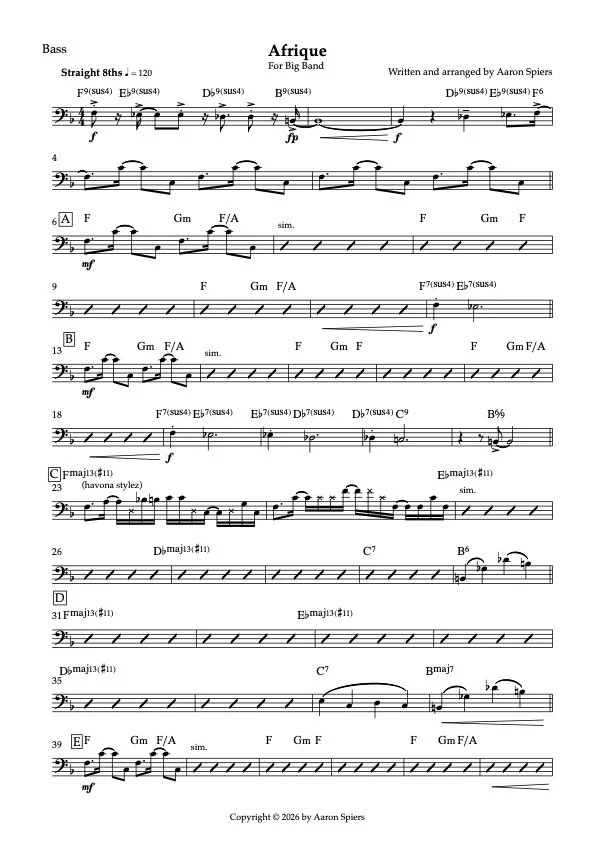
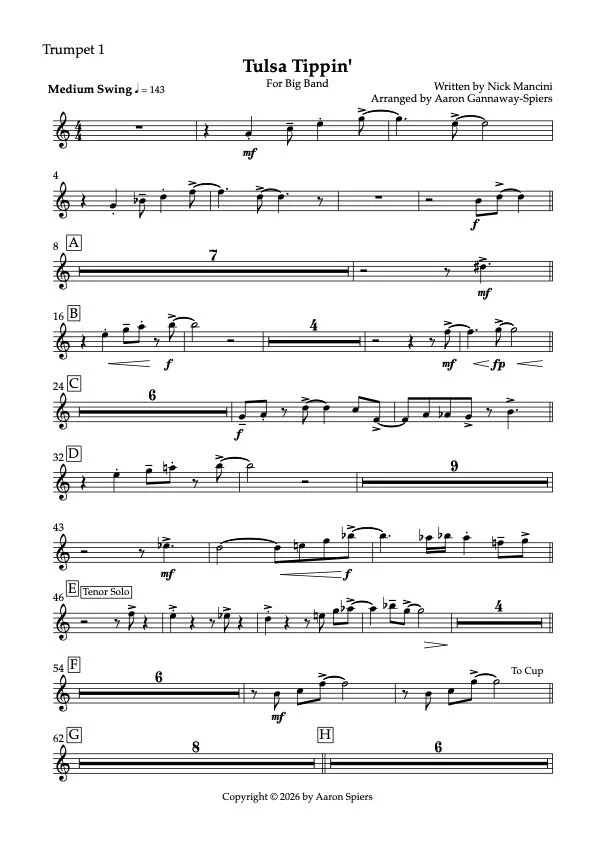
 Image 1 of 7
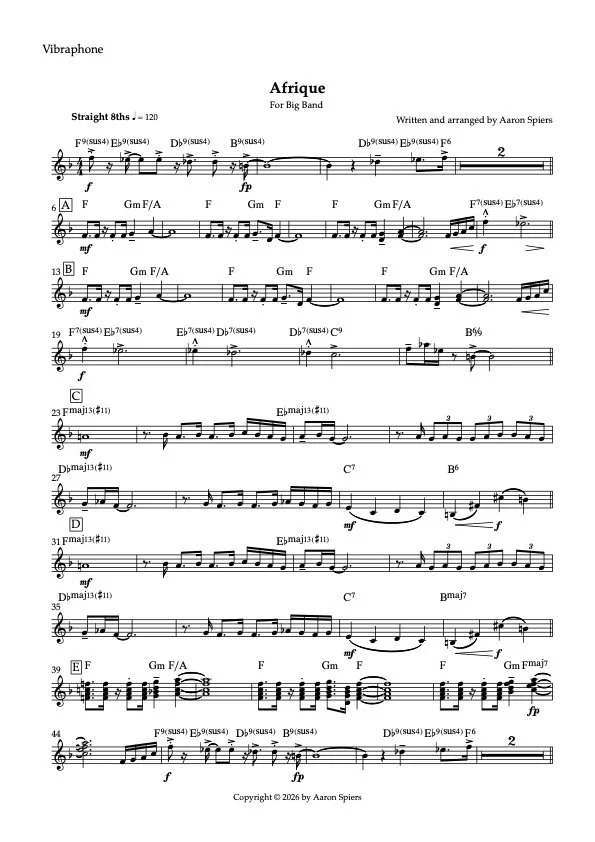
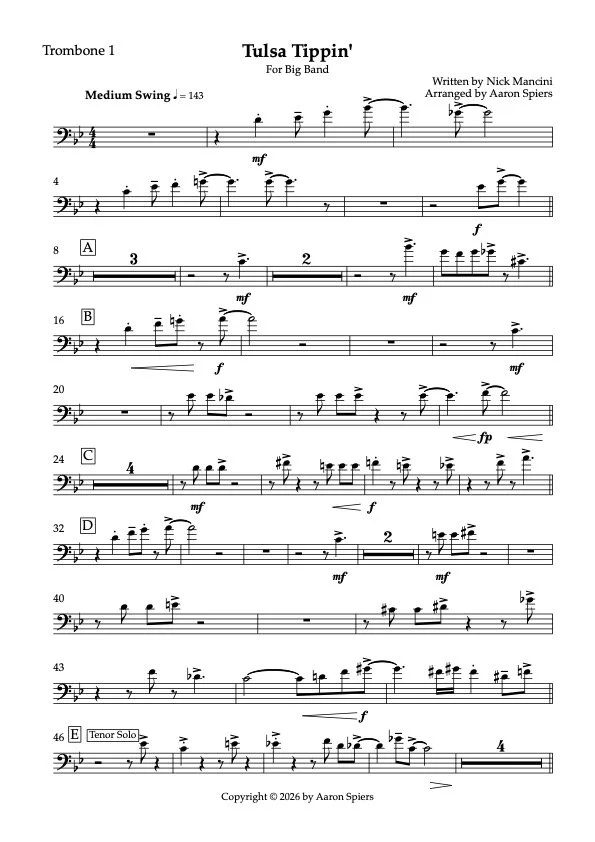
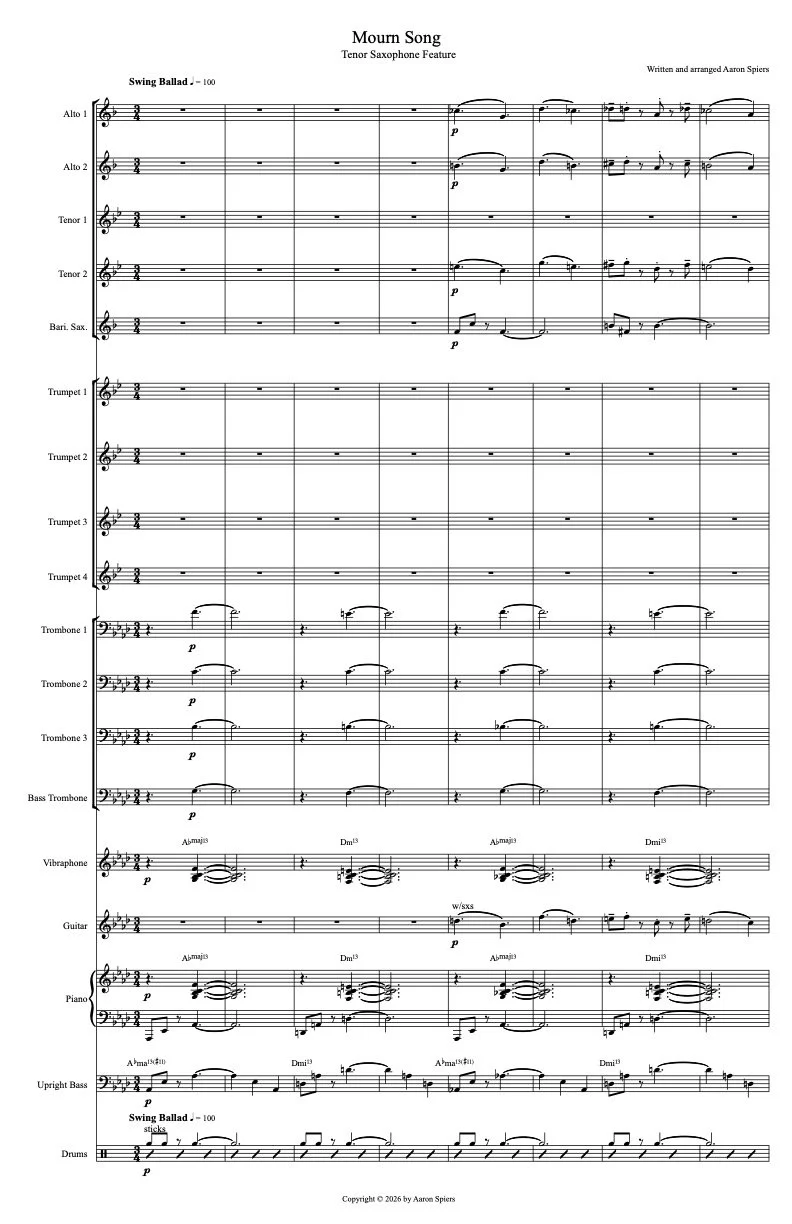 Image 2 of 7
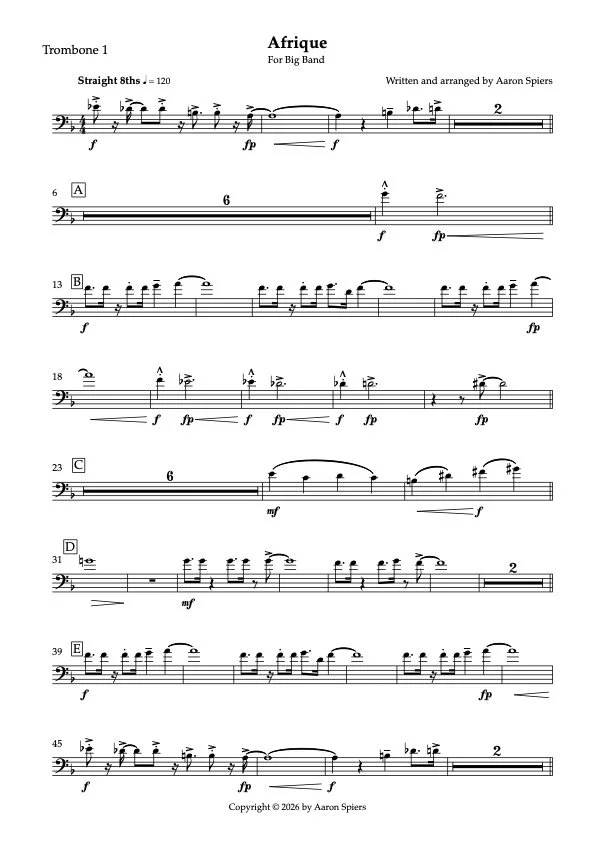
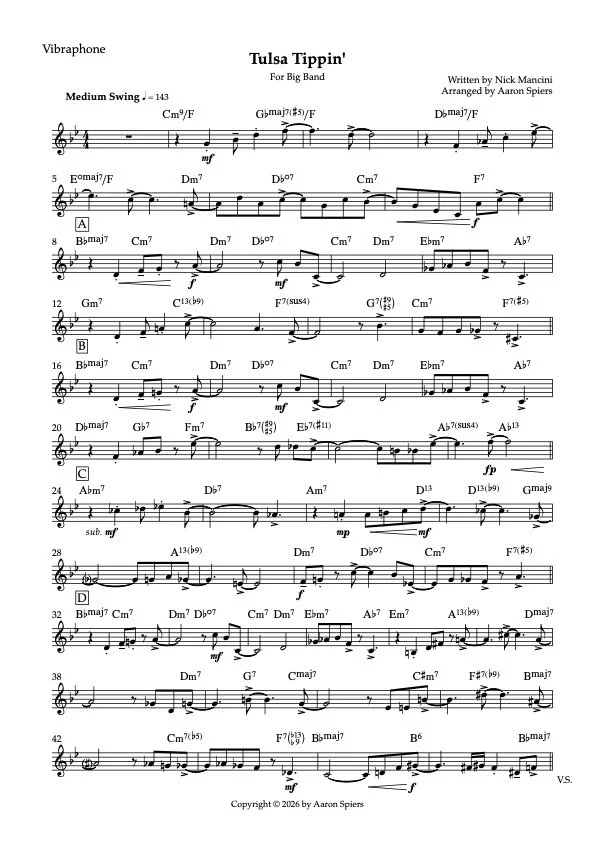
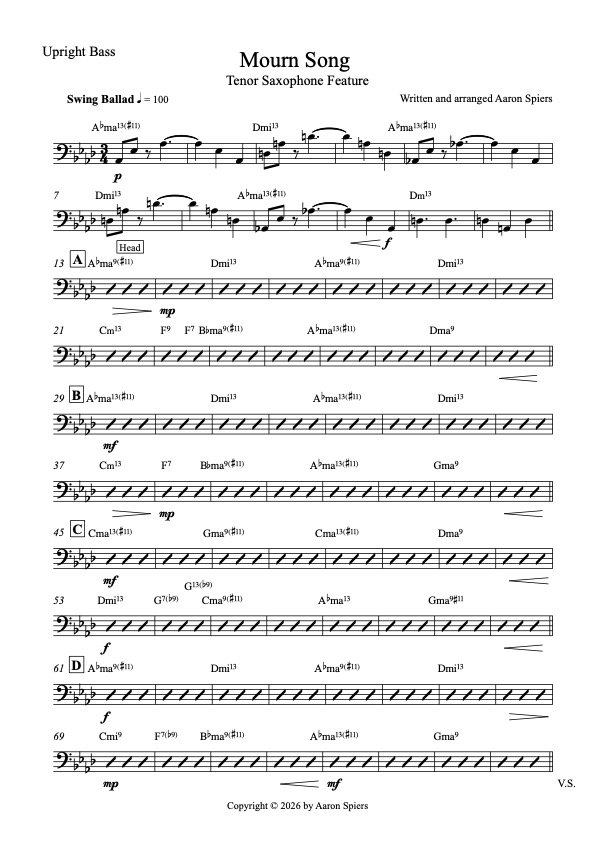 Image 3 of 7
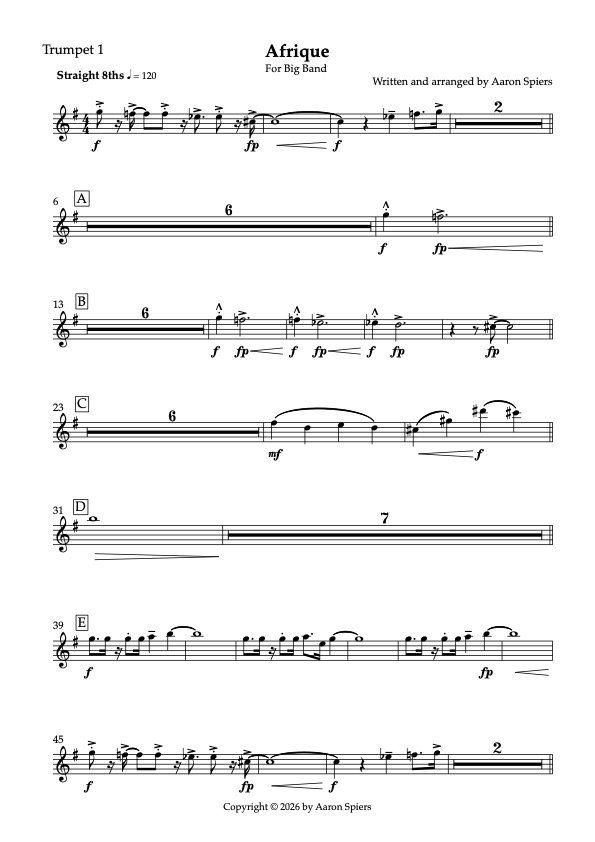
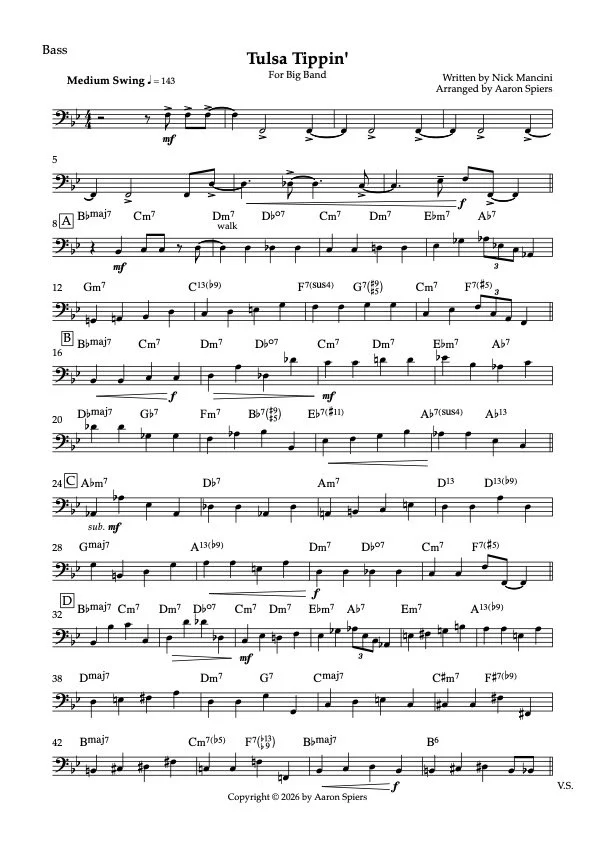
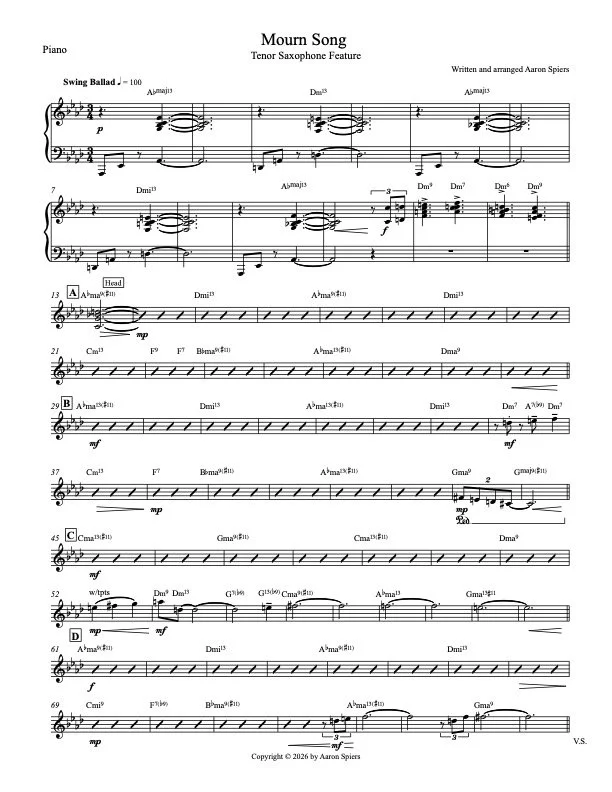 Image 4 of 7
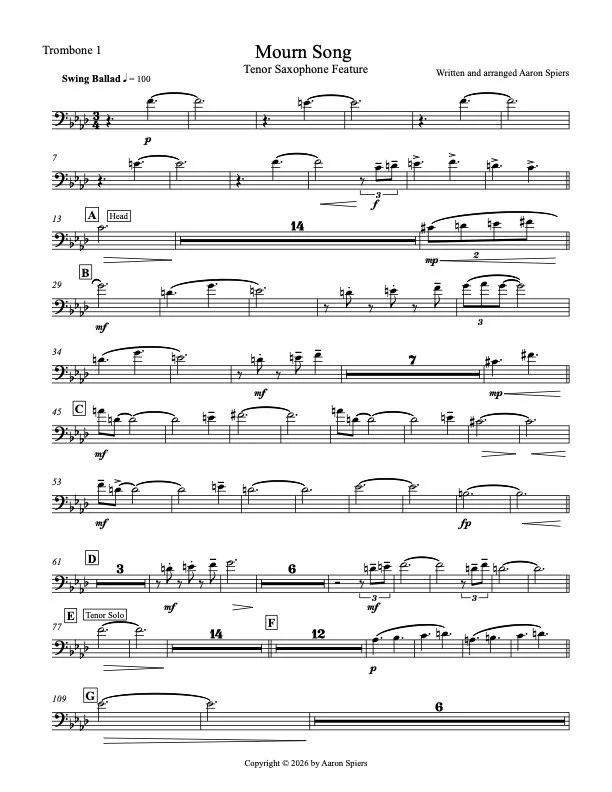 Image 5 of 7
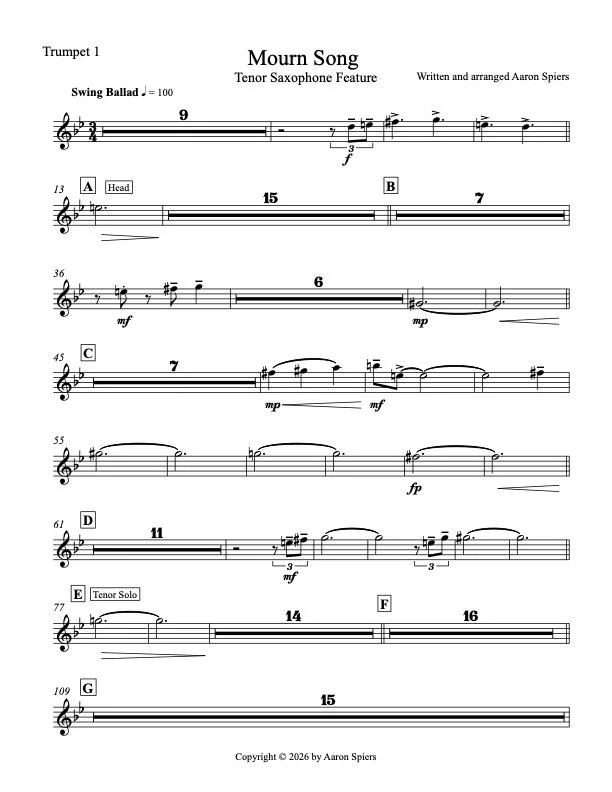 Image 6 of 7
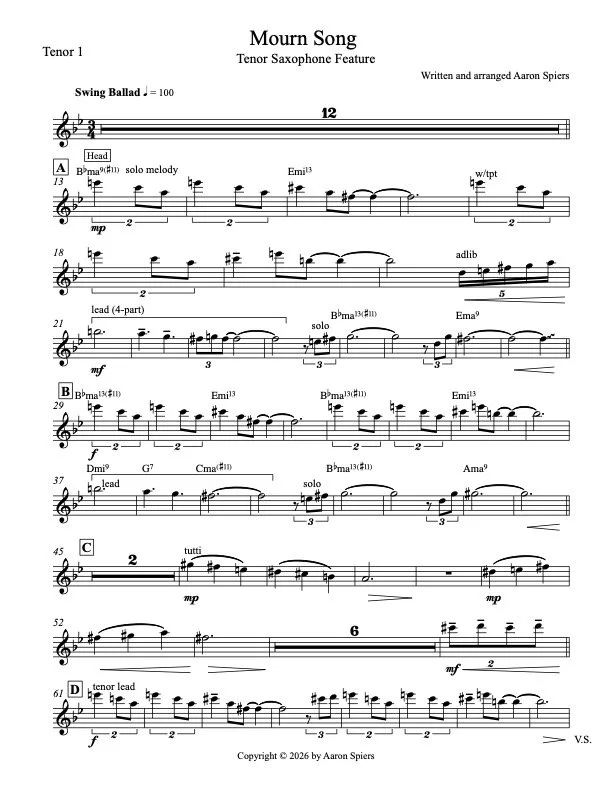 Image 7 of 7