 Image 1 of 2
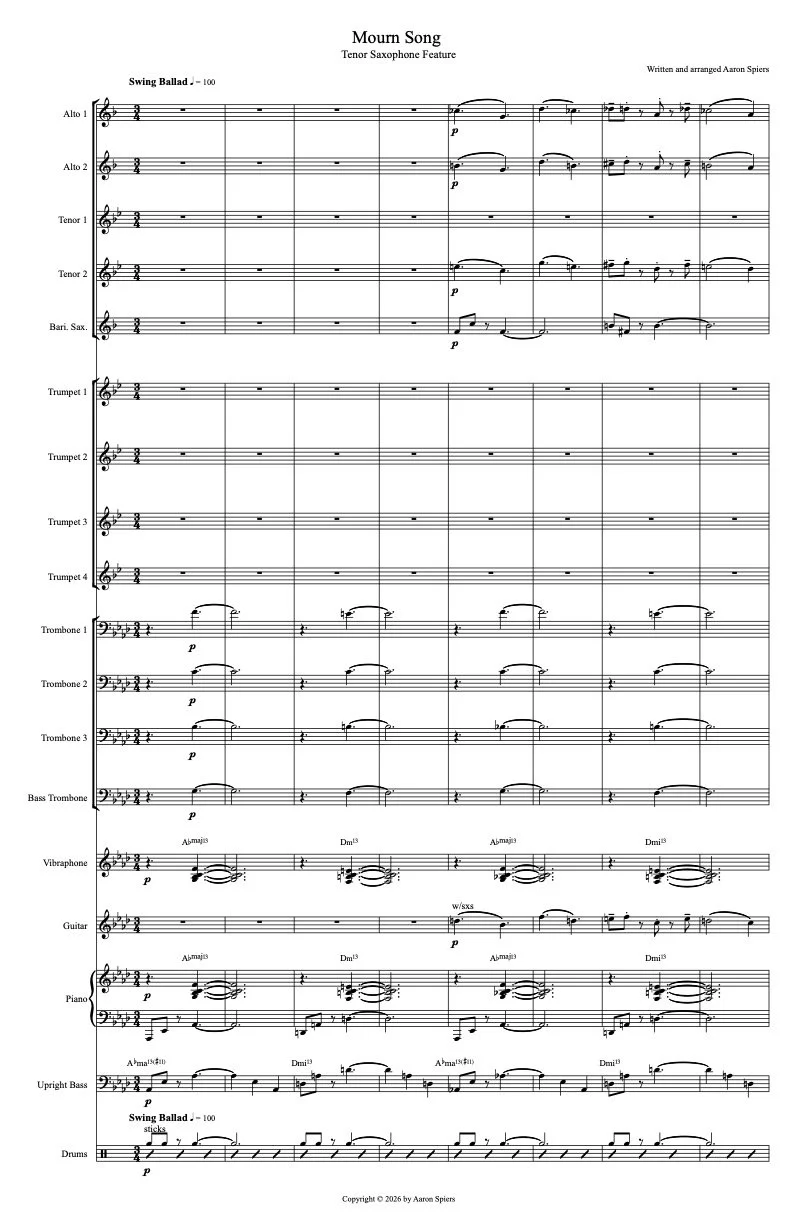 Image 2 of 2
Written as an elegy to Aaron Spiers' late grandmother, Mourn Song explores the expression of grief through warmth and colour rather than traditional minor-key harmony. Instead of relying on conventional harmonic devices associated with melancholy, the composition is built around extended major sonorities and open voicings, creating an atmosphere of remembrance, reflection, and quiet optimism.
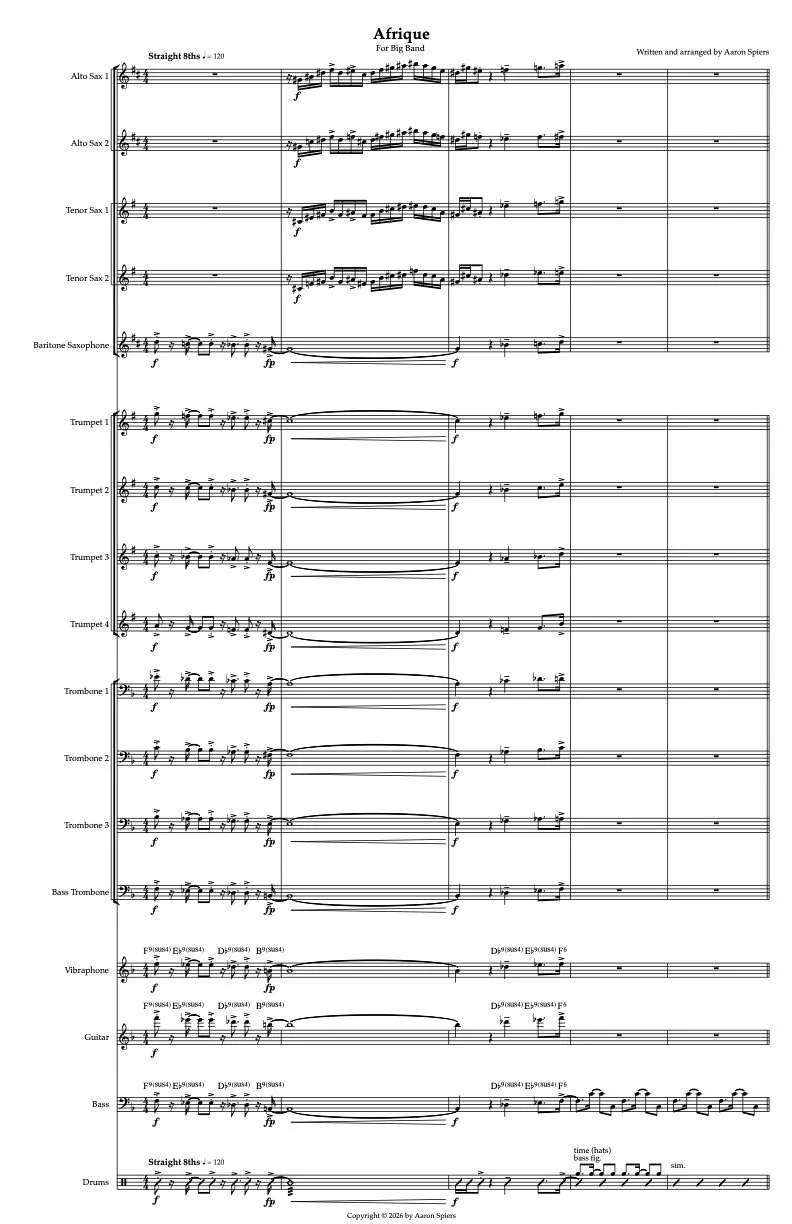
Scored for standard big band, the work unfolds in a traditional jazz orchestra form—Intro, Head, Tenor Saxophone Solo, Interlude, Head/Shout Chorus, and Outro—while continually shifting between full ensemble writing and smaller chamber-like textures. The orchestration favours transparency, allowing individual voices to emerge naturally before expanding into broader ensemble statements.
Rhythmically, the melody incorporates 4-over-3 subdivisions within a swing waltz, providing subtle metric tension while maintaining a flowing pulse. These cross-rhythms, combined with the sustained harmonic language, form the central musical identity of the piece.
The featured tenor saxophone solo is woven into the ensemble rather than presented in isolation, reflecting the conversational approach that characterizes much of the writing. Following the shout chorus, the orchestration gradually dissolves to an intimate dialogue between tenor saxophone and guitar before concluding quietly.
This study score offers insight into contemporary jazz orchestra orchestration, large-ensemble pacing, extended tonal harmony, and the balance between full ensemble writing and chamber-style textures within a modern big band setting.
Written as an elegy to Aaron Spiers' late grandmother, Mourn Song explores the expression of grief through warmth and colour rather than traditional minor-key harmony. Instead of relying on conventional harmonic devices associated with melancholy, the composition is built around extended major sonorities and open voicings, creating an atmosphere of remembrance, reflection, and quiet optimism.
Scored for standard big band, the work unfolds in a traditional jazz orchestra form—Intro, Head, Tenor Saxophone Solo, Interlude, Head/Shout Chorus, and Outro—while continually shifting between full ensemble writing and smaller chamber-like textures. The orchestration favours transparency, allowing individual voices to emerge naturally before expanding into broader ensemble statements.
Rhythmically, the melody incorporates 4-over-3 subdivisions within a swing waltz, providing subtle metric tension while maintaining a flowing pulse. These cross-rhythms, combined with the sustained harmonic language, form the central musical identity of the piece.
The featured tenor saxophone solo is woven into the ensemble rather than presented in isolation, reflecting the conversational approach that characterizes much of the writing. Following the shout chorus, the orchestration gradually dissolves to an intimate dialogue between tenor saxophone and guitar before concluding quietly.
This study score offers insight into contemporary jazz orchestra orchestration, large-ensemble pacing, extended tonal harmony, and the balance between full ensemble writing and chamber-style textures within a modern big band setting.