Length: Approx. 4:38
Tempo: ♩ = 180
Style: Medium Swing
Key: F Major
Difficulty: Grade 4–5
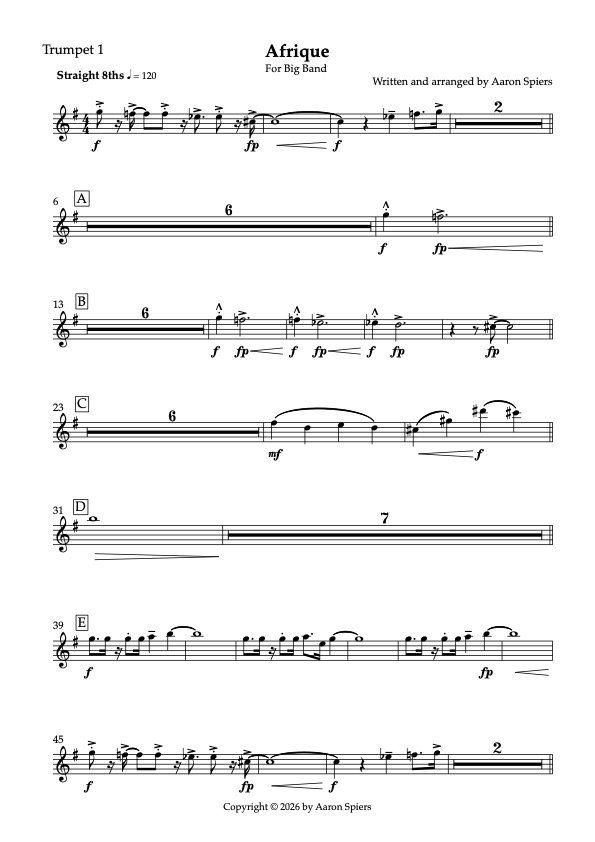
Lead Trumpet Range: Written D♭ above the staff
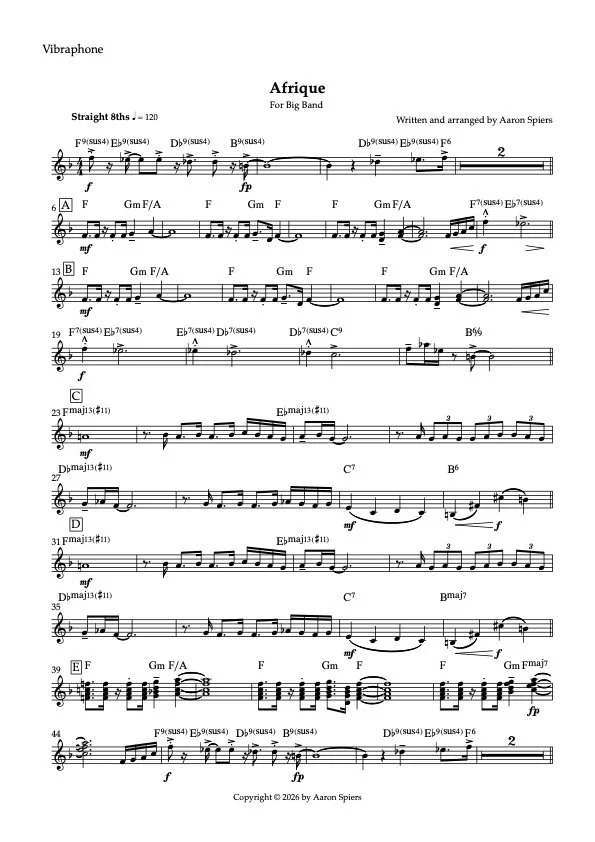
Featured Soloist: Vibraphone
Instrumentation: Standard Big Band (No doubles)
Description
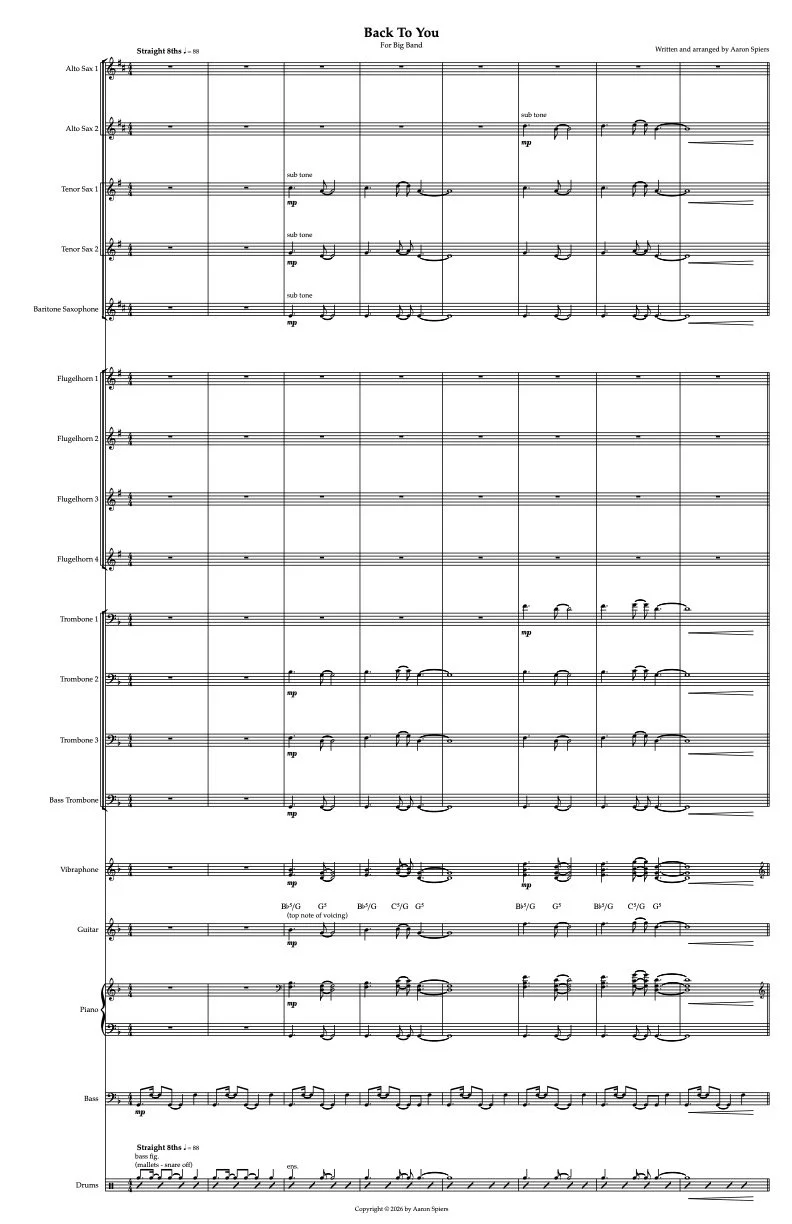
The Edge of Autumn is a contemporary swing composition that blends the energy of a traditional medium swing chart with rich modern harmony and flowing melodic lines. While firmly rooted in the big band tradition, the arrangement explores colourful orchestration and sophisticated harmonic movement, giving the ensemble a fresh and contemporary voice.
The vibraphone serves as both the principal melodic instrument and featured improviser throughout the piece. The opening melody unfolds through an intricate, lyrical line that weaves naturally across the ensemble before opening into a feature for the soloist.
Throughout the arrangement, the band alternates between providing subtle accompaniment for the vibraphone and expanding into full ensemble statements, creating continual contrast in texture and dynamics.
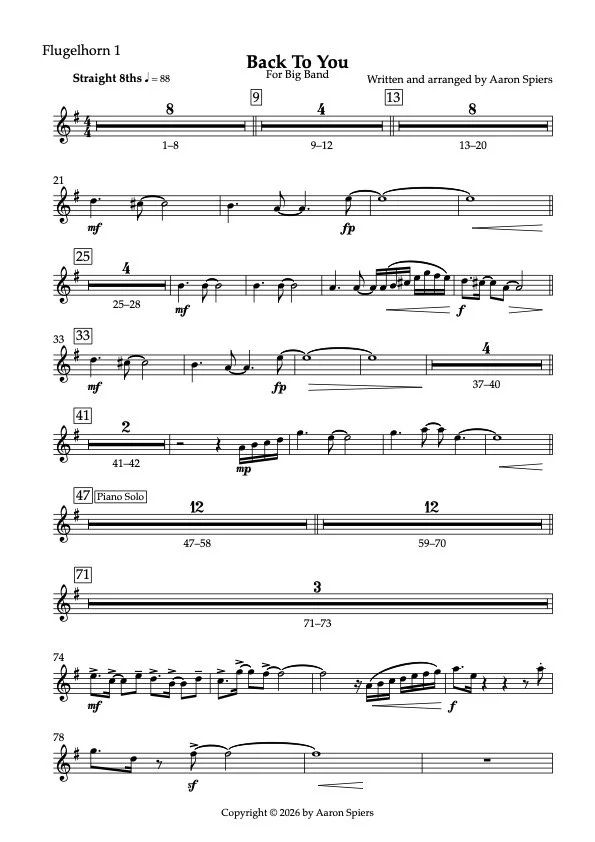
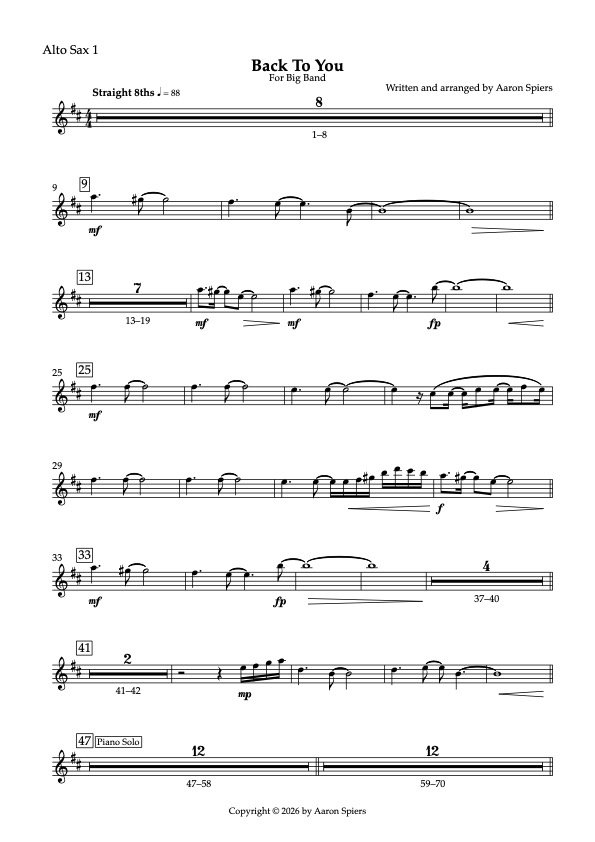
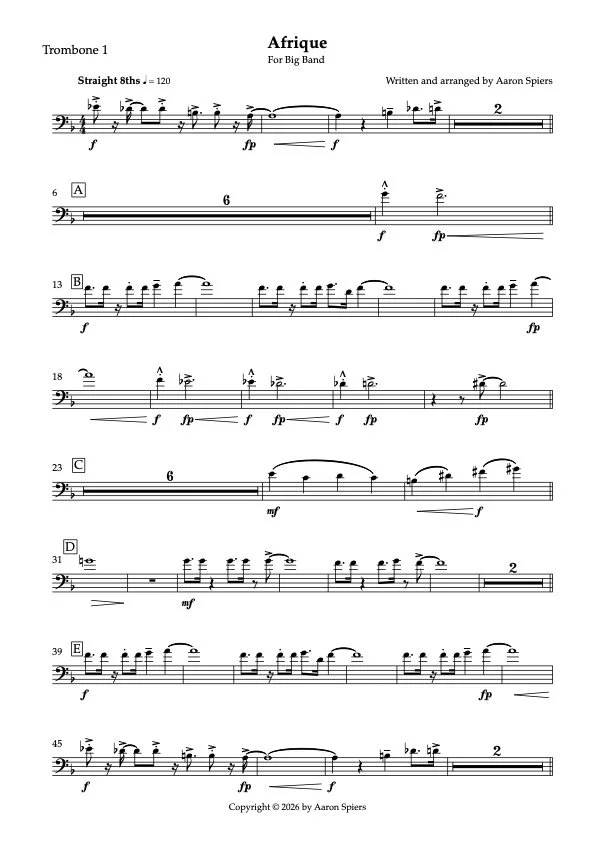
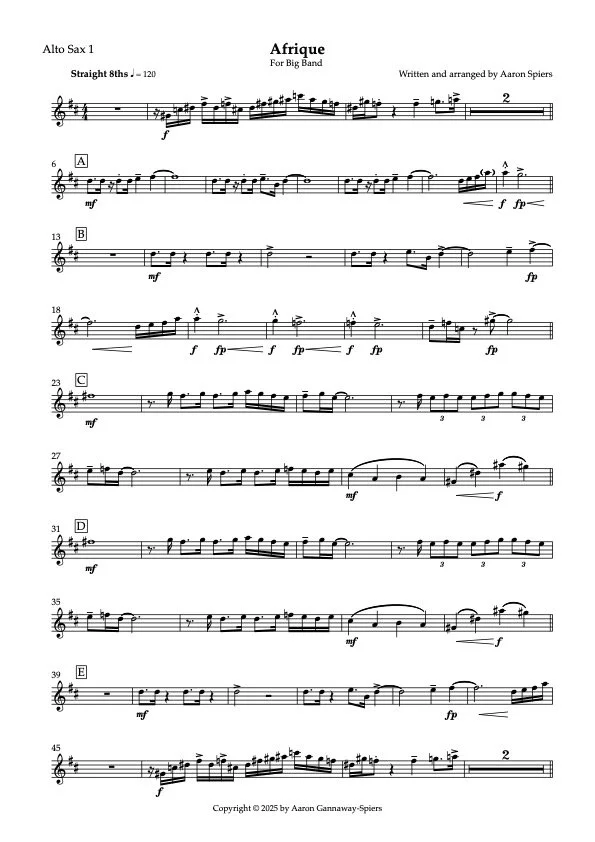
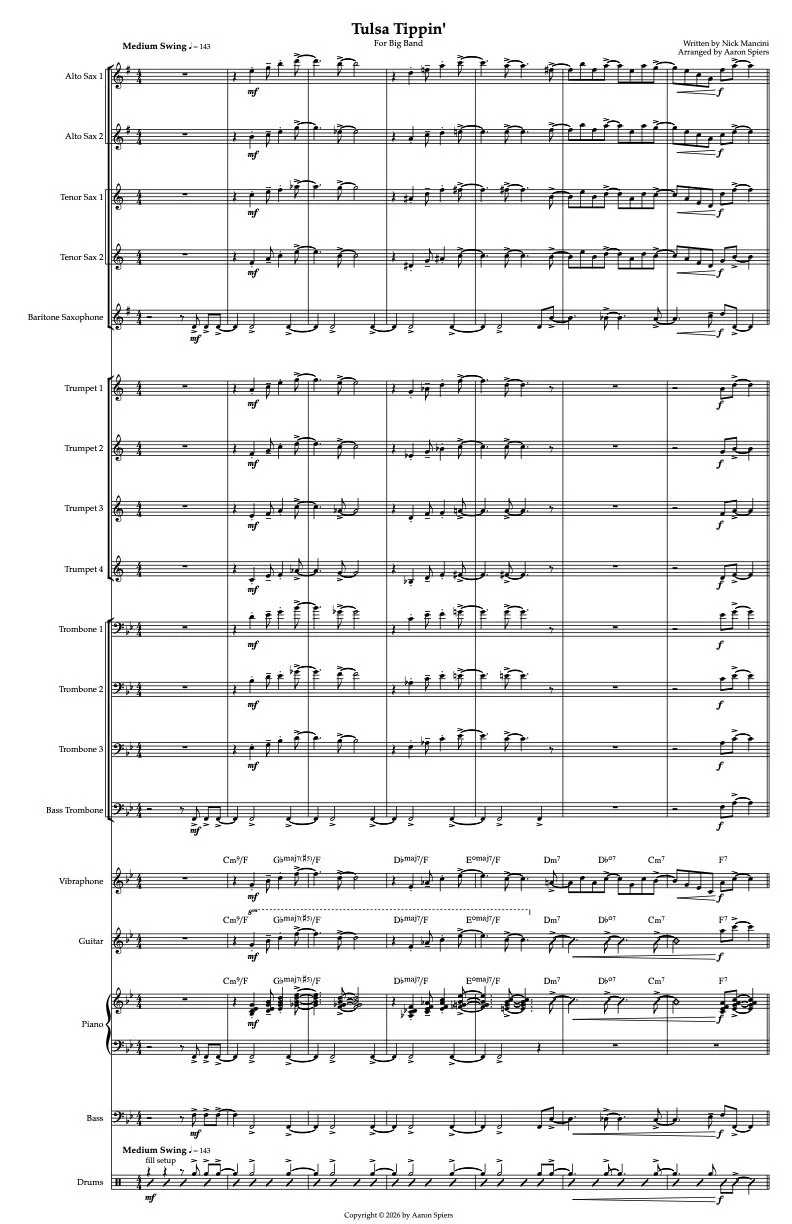
The arrangement follows a concise concert form: Intro – Head – Vibraphone Solo – Head Out
Despite its relatively compact length, the piece provides every section of the ensemble with opportunities to shape the musical narrative through careful phrasing, dynamic contrast, and responsive accompaniment. The result is a swing chart that is equally rewarding for the featured soloist and the ensemble as a whole.
Performance Notes
Balance is critical throughout the arrangement. The vibraphone should remain clearly audible above the ensemble, particularly if amplification is limited.
Dynamic contrast is one of the defining characteristics of the piece. Encourage the ensemble to fully exploit the difference between accompanying textures and full-band passages.
The melodic lines should be approached with a lyrical, connected style, maintaining a strong swing feel without sacrificing fluidity.
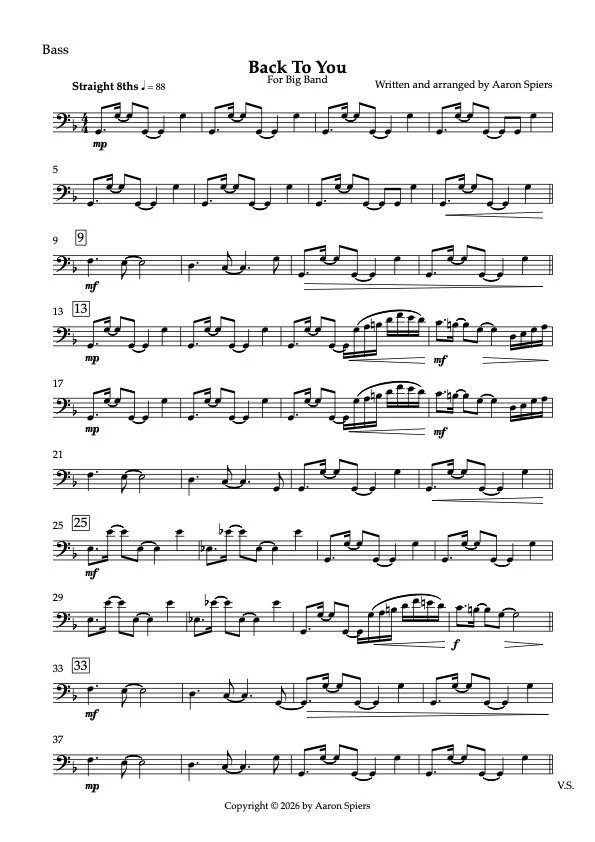
Rhythm section players should focus on a relaxed, buoyant swing feel, providing a solid foundation while allowing the vibraphone room to breathe.
The featured solo provides an opportunity for melodic development and interaction with the ensemble rather than purely technical display.
Length: Approx. 4:38
Tempo: ♩ = 180
Style: Medium Swing
Key: F Major
Difficulty: Grade 4–5
Lead Trumpet Range: Written D♭ above the staff
Featured Soloist: Vibraphone
Instrumentation: Standard Big Band (No doubles)
Description
The Edge of Autumn is a contemporary swing composition that blends the energy of a traditional medium swing chart with rich modern harmony and flowing melodic lines. While firmly rooted in the big band tradition, the arrangement explores colourful orchestration and sophisticated harmonic movement, giving the ensemble a fresh and contemporary voice.
The vibraphone serves as both the principal melodic instrument and featured improviser throughout the piece. The opening melody unfolds through an intricate, lyrical line that weaves naturally across the ensemble before opening into a feature for the soloist.
Throughout the arrangement, the band alternates between providing subtle accompaniment for the vibraphone and expanding into full ensemble statements, creating continual contrast in texture and dynamics.
The arrangement follows a concise concert form: Intro – Head – Vibraphone Solo – Head Out
Despite its relatively compact length, the piece provides every section of the ensemble with opportunities to shape the musical narrative through careful phrasing, dynamic contrast, and responsive accompaniment. The result is a swing chart that is equally rewarding for the featured soloist and the ensemble as a whole.
Performance Notes
Balance is critical throughout the arrangement. The vibraphone should remain clearly audible above the ensemble, particularly if amplification is limited.
Dynamic contrast is one of the defining characteristics of the piece. Encourage the ensemble to fully exploit the difference between accompanying textures and full-band passages.
The melodic lines should be approached with a lyrical, connected style, maintaining a strong swing feel without sacrificing fluidity.
Rhythm section players should focus on a relaxed, buoyant swing feel, providing a solid foundation while allowing the vibraphone room to breathe.
The featured solo provides an opportunity for melodic development and interaction with the ensemble rather than purely technical display.
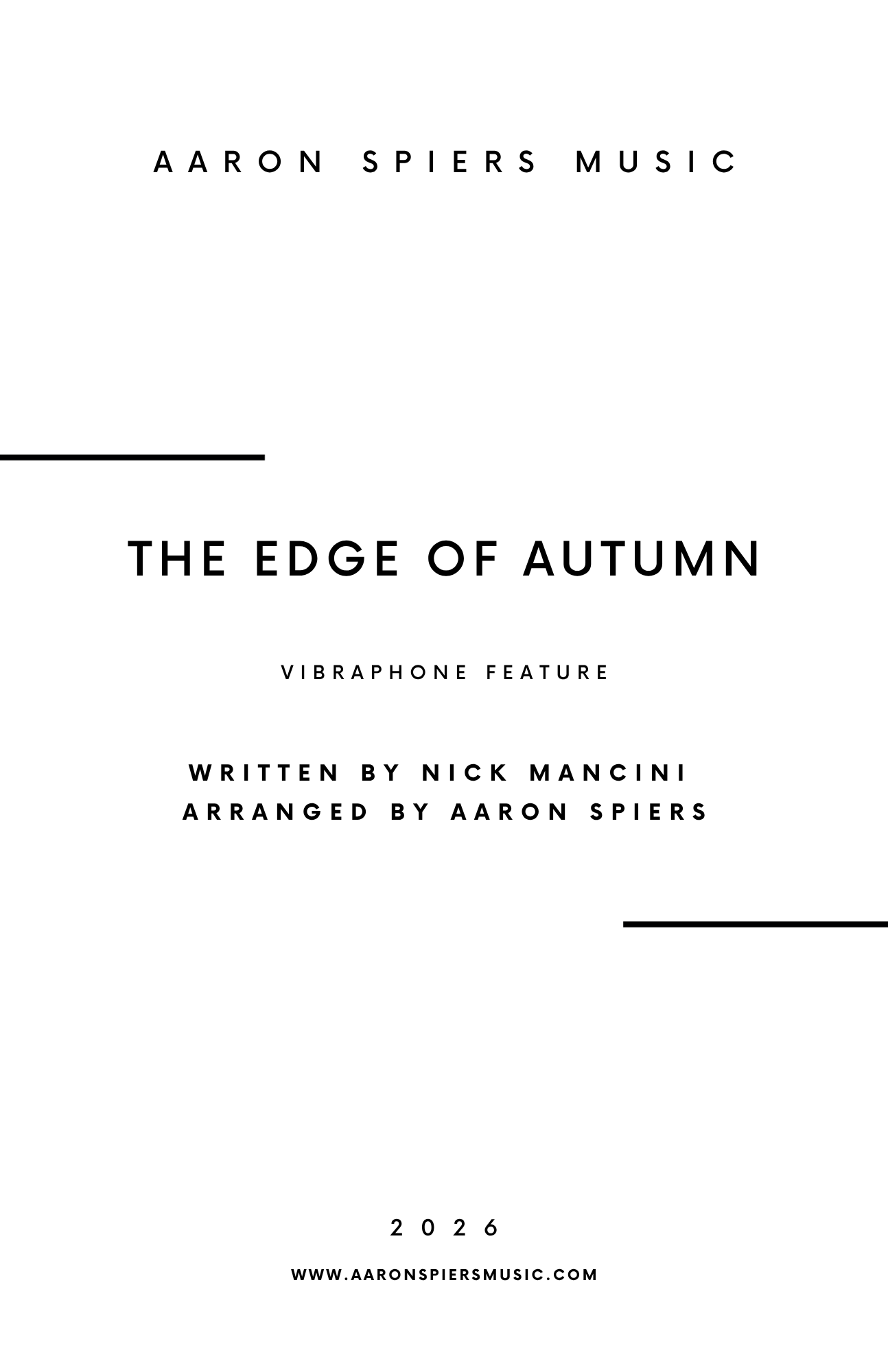 Image 1 of 6
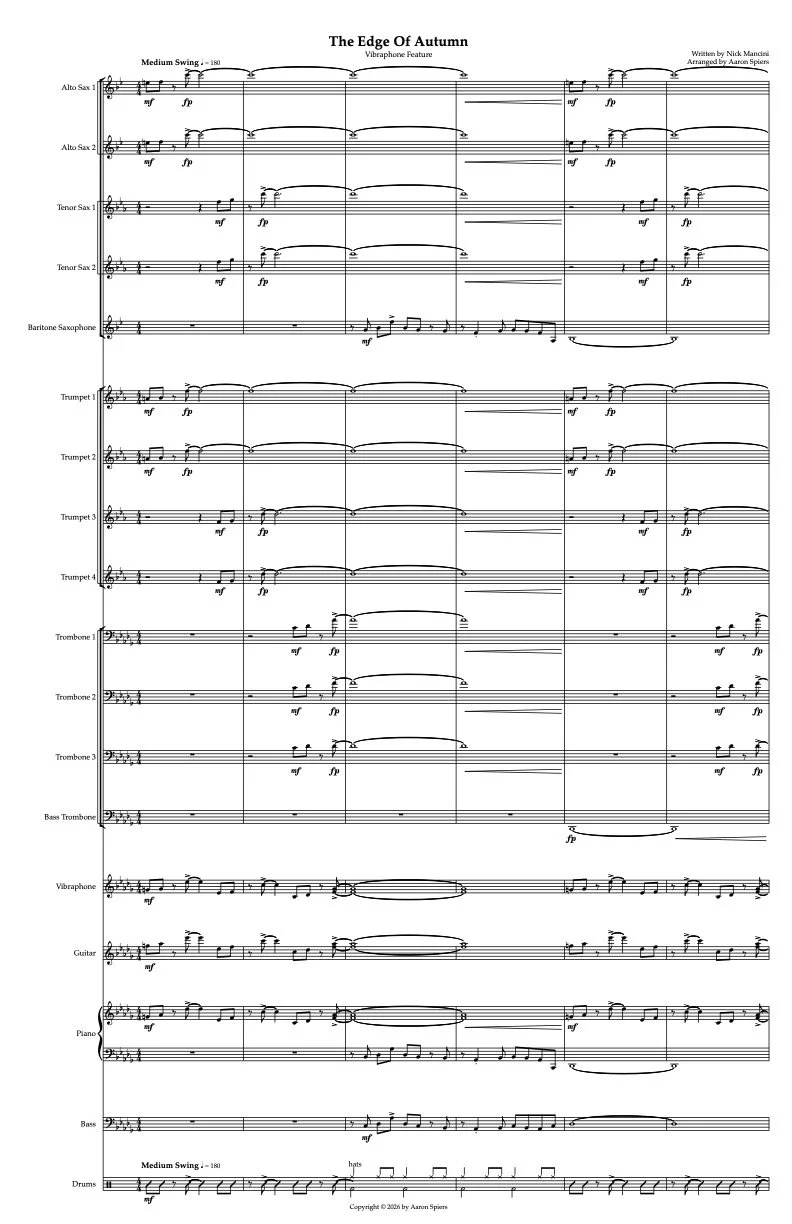 Image 2 of 6
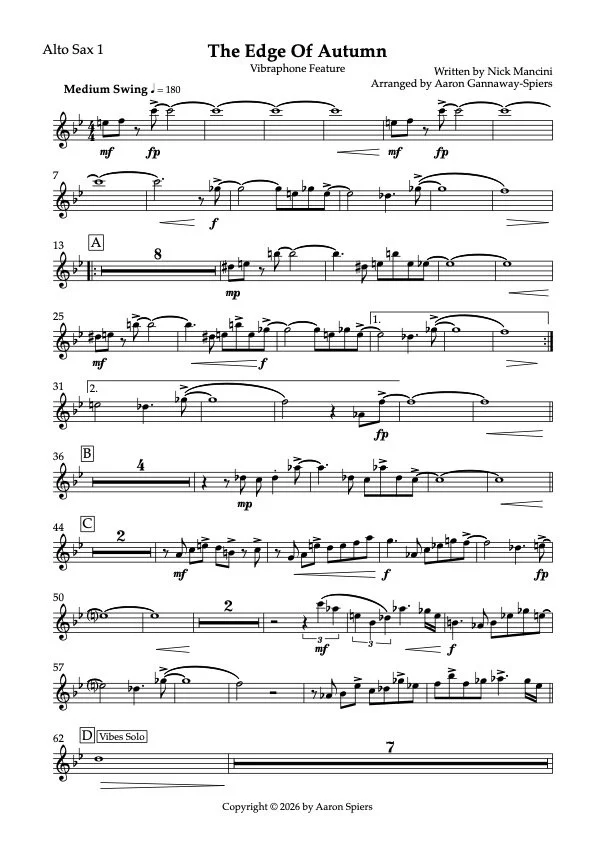 Image 3 of 6
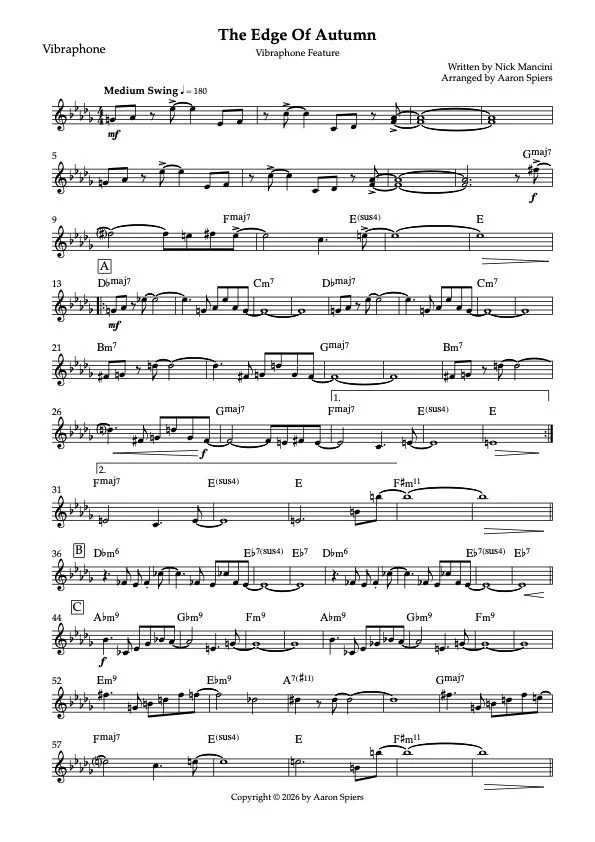 Image 4 of 6
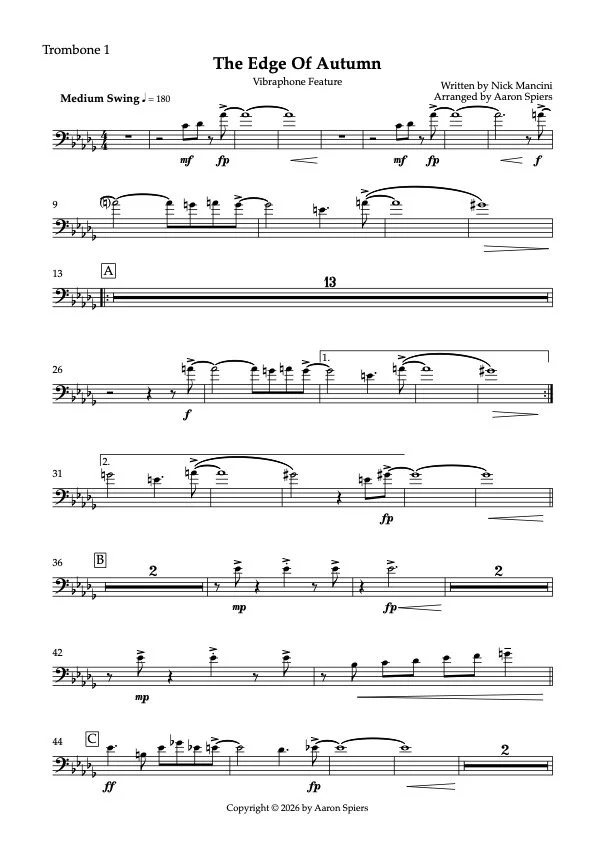 Image 5 of 6
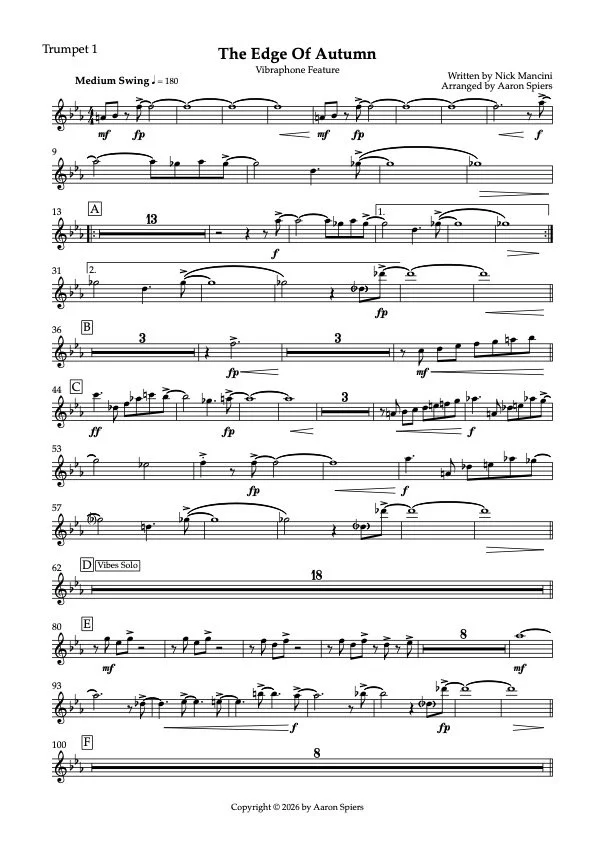 Image 6 of 6