 Image 1 of 2
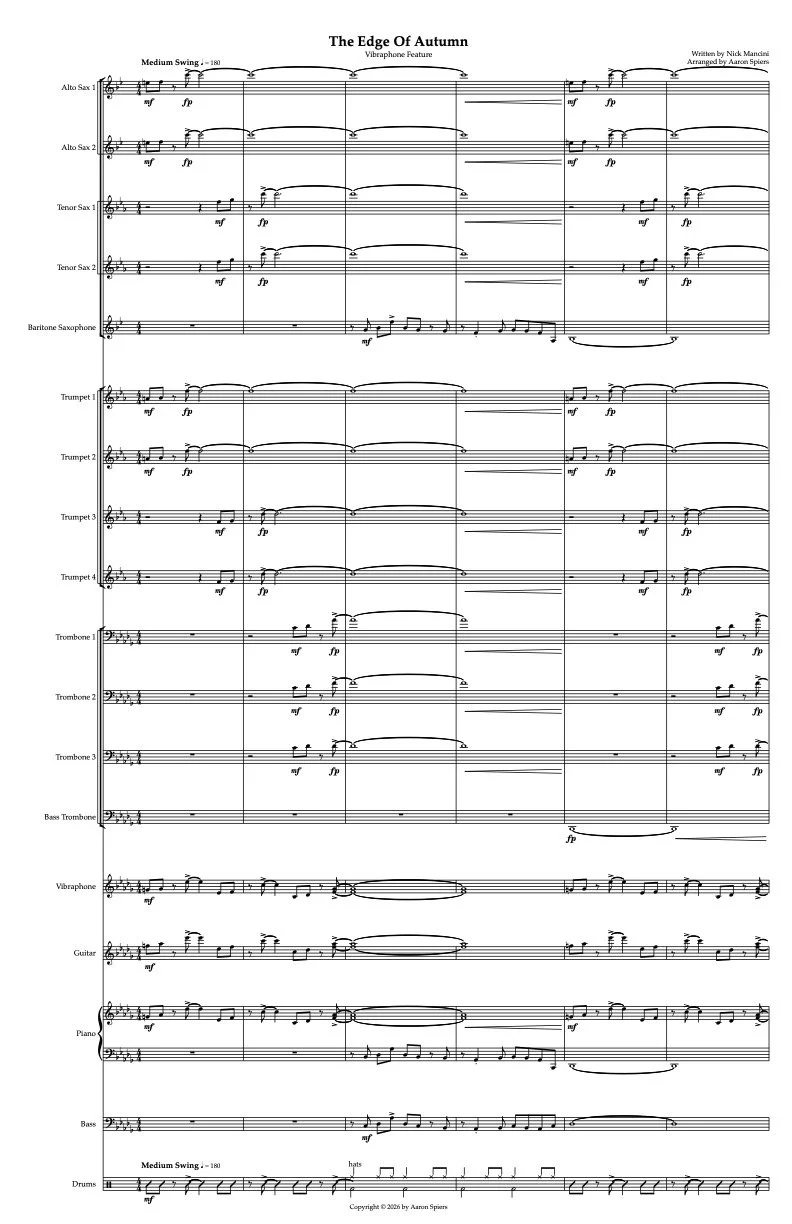 Image 2 of 2
The Edge of Autumn is a contemporary medium swing composition that blends the rhythmic energy of the traditional jazz orchestra with a modern harmonic language and orchestral approach. Conceived as a feature for vibraphone, the work explores the relationship between lyrical melodic writing, transparent orchestration, and dynamic contrast, allowing the featured soloist to move naturally between intimate chamber textures and full ensemble statements.
The composition follows a concise form of Intro, Head, Vibraphone Solo, Head Out, demonstrating how a relatively simple formal structure can be developed through evolving orchestration rather than constant thematic variation. The vibraphone serves as both the principal melodic voice and featured improviser, with the surrounding ensemble alternating between supportive accompaniment and moments of orchestral prominence.
Throughout the work, melodic material unfolds through flowing, interconnected lines that weave across the ensemble rather than remaining confined to a single section. Rich contemporary harmonies and careful voice leading provide colour and forward motion while preserving the buoyant character of the swing feel. The orchestration places particular emphasis on balance and transparency, allowing the vibraphone's naturally delicate timbre to remain clearly defined within the larger ensemble.
Although firmly rooted in the swing tradition, The Edge of Autumn adopts a modern orchestral perspective, drawing upon subtle shifts in texture, register, and ensemble density to shape the musical narrative. The result is a work that values lyricism, pacing, and ensemble colour as highly as technical virtuosity.
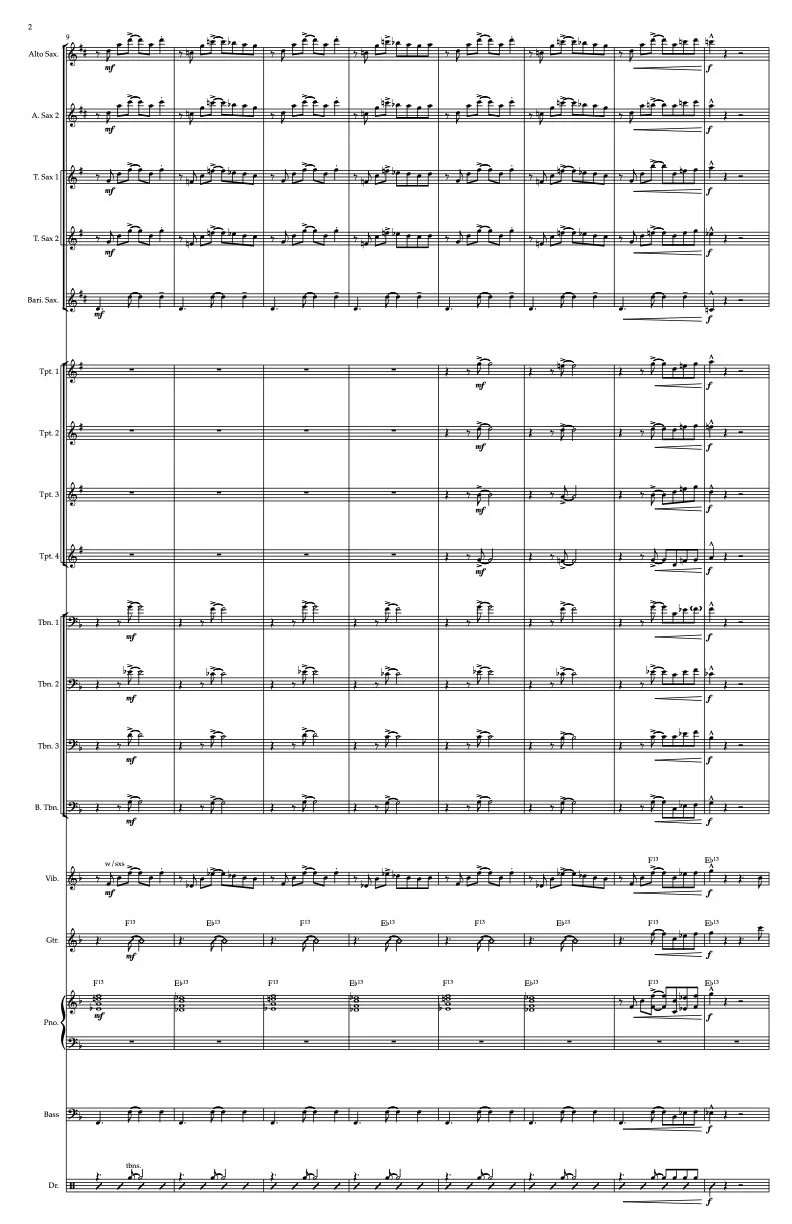
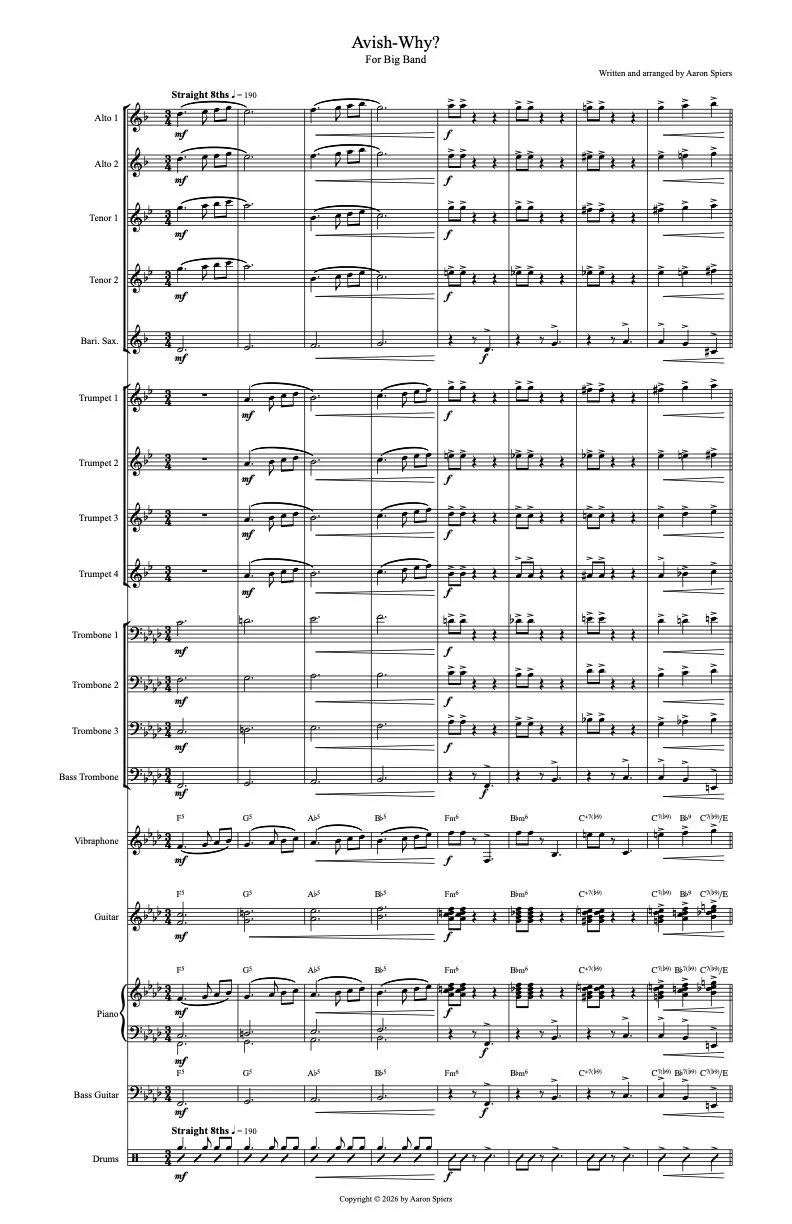
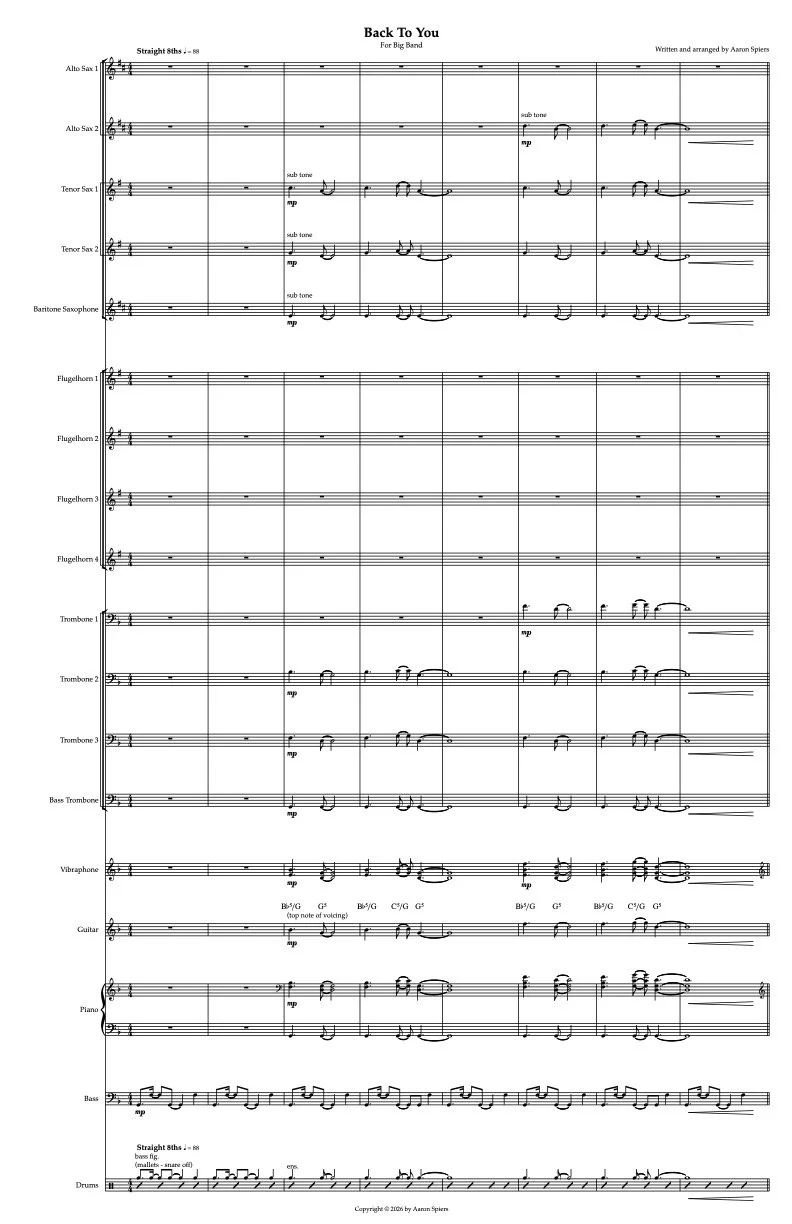
This study score provides insight into contemporary jazz orchestra orchestration, writing for featured vibraphone, modern harmonic voicing within a traditional swing context, and the use of dynamic contrast and orchestral texture as primary compositional devices. It illustrates how clarity of melodic material and thoughtful orchestration can create a rich and expressive musical landscape within a compact large ensemble form.
The Edge of Autumn is a contemporary medium swing composition that blends the rhythmic energy of the traditional jazz orchestra with a modern harmonic language and orchestral approach. Conceived as a feature for vibraphone, the work explores the relationship between lyrical melodic writing, transparent orchestration, and dynamic contrast, allowing the featured soloist to move naturally between intimate chamber textures and full ensemble statements.
The composition follows a concise form of Intro, Head, Vibraphone Solo, Head Out, demonstrating how a relatively simple formal structure can be developed through evolving orchestration rather than constant thematic variation. The vibraphone serves as both the principal melodic voice and featured improviser, with the surrounding ensemble alternating between supportive accompaniment and moments of orchestral prominence.
Throughout the work, melodic material unfolds through flowing, interconnected lines that weave across the ensemble rather than remaining confined to a single section. Rich contemporary harmonies and careful voice leading provide colour and forward motion while preserving the buoyant character of the swing feel. The orchestration places particular emphasis on balance and transparency, allowing the vibraphone's naturally delicate timbre to remain clearly defined within the larger ensemble.
Although firmly rooted in the swing tradition, The Edge of Autumn adopts a modern orchestral perspective, drawing upon subtle shifts in texture, register, and ensemble density to shape the musical narrative. The result is a work that values lyricism, pacing, and ensemble colour as highly as technical virtuosity.
This study score provides insight into contemporary jazz orchestra orchestration, writing for featured vibraphone, modern harmonic voicing within a traditional swing context, and the use of dynamic contrast and orchestral texture as primary compositional devices. It illustrates how clarity of melodic material and thoughtful orchestration can create a rich and expressive musical landscape within a compact large ensemble form.