Length: Approx. 5:51
Tempo: ♩ = 143
Style: Medium Swing
Key: B♭ Major
Difficulty: Grade 3–4
Lead Trumpet Range: Written high B
Featured Soloists: Tenor Saxophone 2, Vibraphone (sub. Piano or guitar)
Instrumentation: Standard Big Band (No doubles)
Description
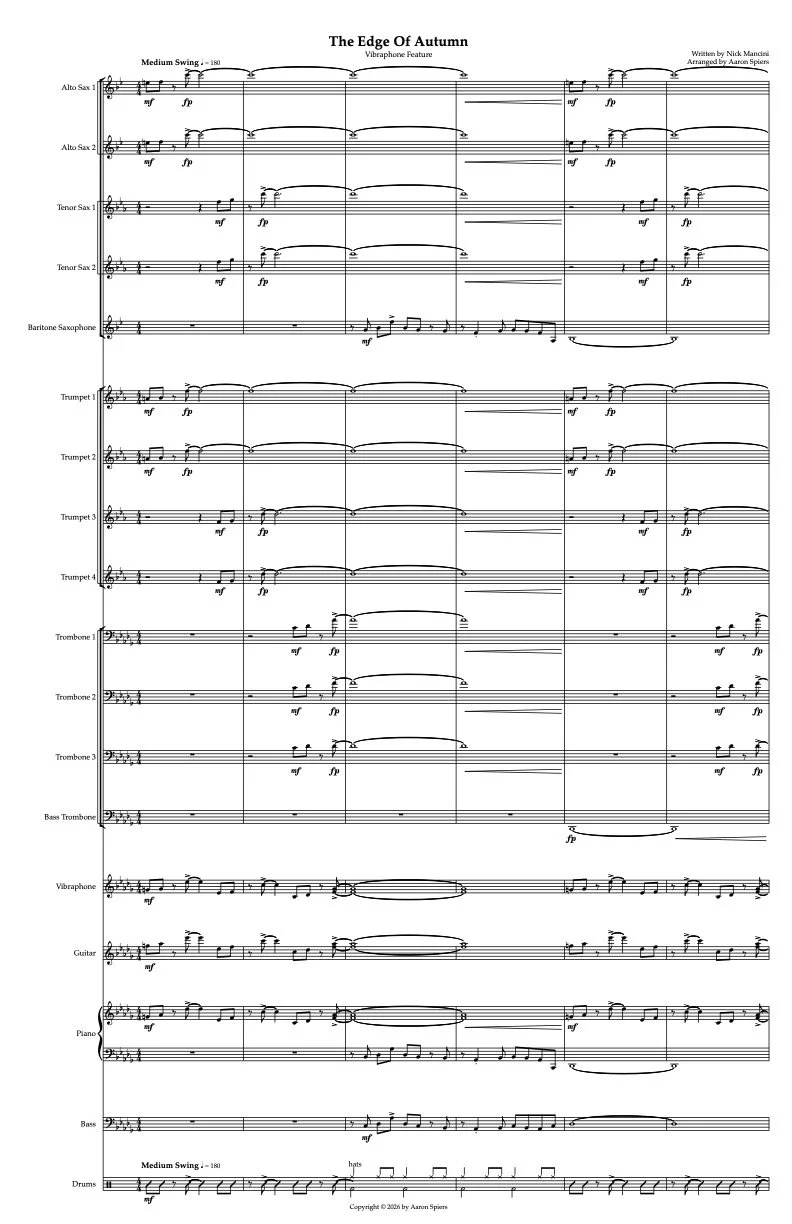
Inspired by the vibrant jazz scene of Tulsa, Oklahoma, Tulsa Tippin' is a medium swing chart that combines a memorable, blues-inflected melody with sophisticated harmonic movement and energetic ensemble writing. While rooted in the classic big band tradition, the arrangement incorporates contemporary harmonic colours and fluid orchestration, making it equally at home in concert or festival programming.
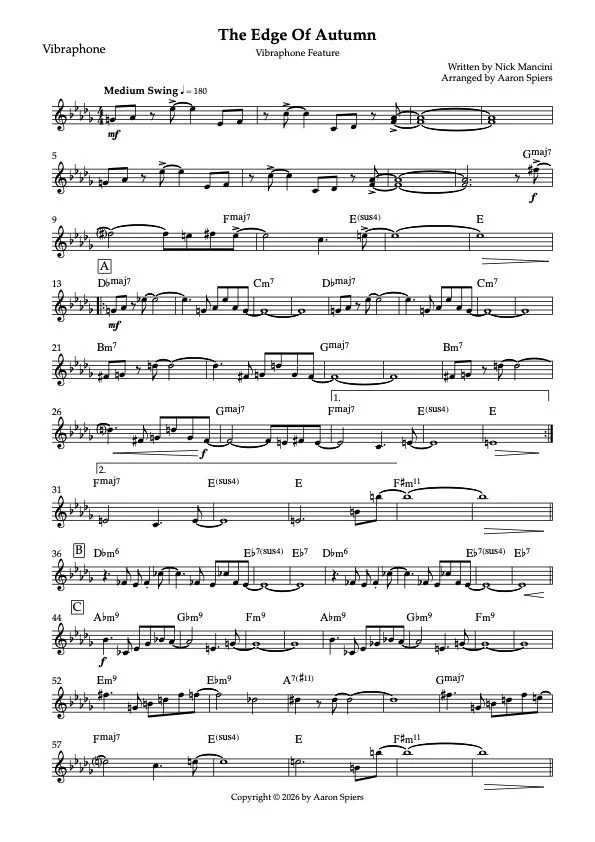
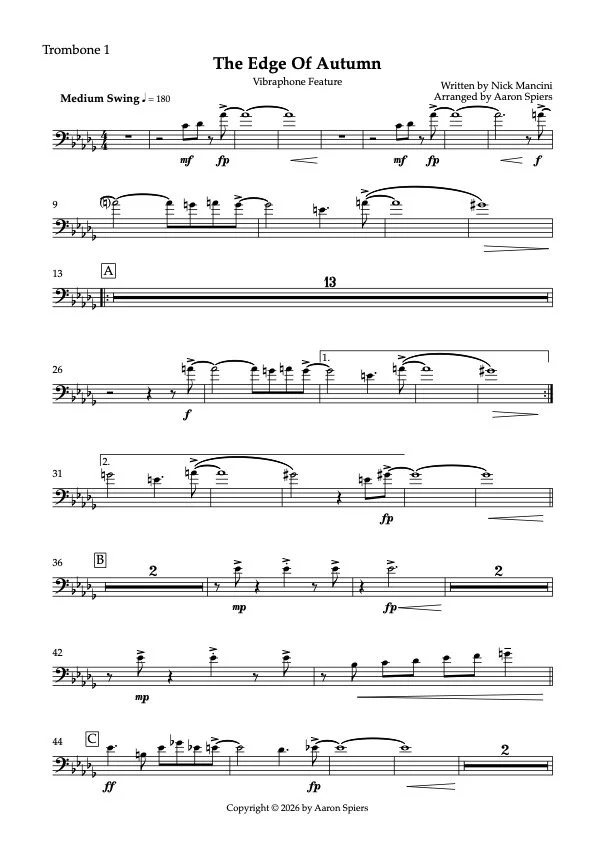
The melody is passed naturally between the vibraphone, saxophones, trombones, and trumpets, creating continual changes in colour while maintaining a cohesive musical narrative. Rather than relying on dense orchestration throughout, the arrangement allows each section of the band to step forward at different moments, giving the music an effortless sense of motion.
The form follows a traditional swinging framework: Intro – Head – Tenor Saxophone Solo – Vibraphone Solo – Saxophone Soli – Head Out
The arrangement reaches its climax with an extended full-chorus saxophone soli inspired by the writing of Thad Jones, demanding confident section playing, clear articulation, and strong ensemble blend before the full band returns for the final statement of the melody.
Although harmonically adventurous, the melody remains intentionally straightforward, providing an excellent opportunity for the ensemble to develop relaxed swing phrasing, dynamic control, and the art of "laying back" while maintaining forward momentum.
Performance Notes
A relaxed, buoyant swing feel is essential. Resist the temptation to rush the time, particularly during ensemble passages.
The melody should move seamlessly between sections, with each new entrance matching articulation, style, and phrasing.
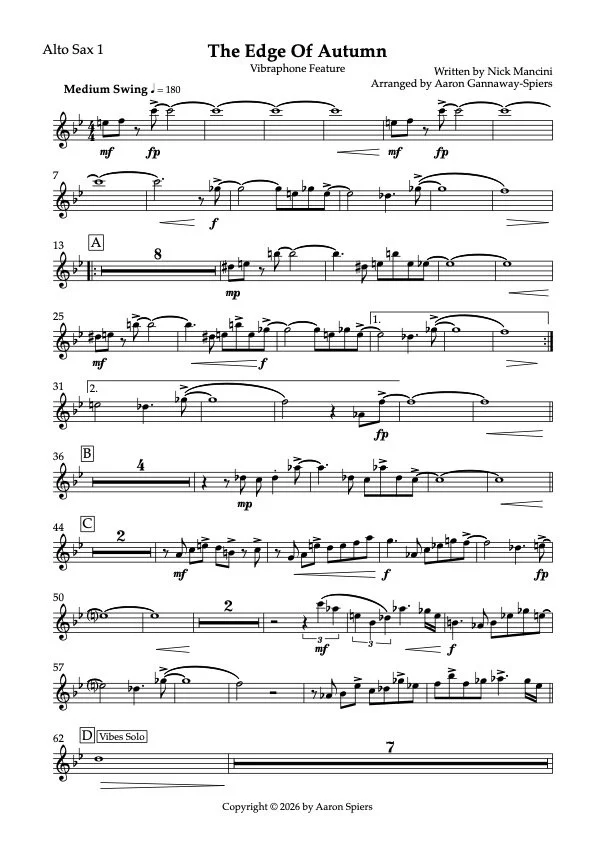
The saxophone soli should be approached as a single musical voice, with careful attention to balance, intonation, and unified articulation.
The rhythm section should provide a light but driving swing feel, supporting the soloists without overpowering the ensemble.
Trumpet cup mute changes should be prepared in advance to ensure smooth transitions.
Length: Approx. 5:51
Tempo: ♩ = 143
Style: Medium Swing
Key: B♭ Major
Difficulty: Grade 3–4
Lead Trumpet Range: Written high B
Featured Soloists: Tenor Saxophone 2, Vibraphone (sub. Piano or guitar)
Instrumentation: Standard Big Band (No doubles)
Description
Inspired by the vibrant jazz scene of Tulsa, Oklahoma, Tulsa Tippin' is a medium swing chart that combines a memorable, blues-inflected melody with sophisticated harmonic movement and energetic ensemble writing. While rooted in the classic big band tradition, the arrangement incorporates contemporary harmonic colours and fluid orchestration, making it equally at home in concert or festival programming.
The melody is passed naturally between the vibraphone, saxophones, trombones, and trumpets, creating continual changes in colour while maintaining a cohesive musical narrative. Rather than relying on dense orchestration throughout, the arrangement allows each section of the band to step forward at different moments, giving the music an effortless sense of motion.
The form follows a traditional swinging framework: Intro – Head – Tenor Saxophone Solo – Vibraphone Solo – Saxophone Soli – Head Out
The arrangement reaches its climax with an extended full-chorus saxophone soli inspired by the writing of Thad Jones, demanding confident section playing, clear articulation, and strong ensemble blend before the full band returns for the final statement of the melody.
Although harmonically adventurous, the melody remains intentionally straightforward, providing an excellent opportunity for the ensemble to develop relaxed swing phrasing, dynamic control, and the art of "laying back" while maintaining forward momentum.
Performance Notes
A relaxed, buoyant swing feel is essential. Resist the temptation to rush the time, particularly during ensemble passages.
The melody should move seamlessly between sections, with each new entrance matching articulation, style, and phrasing.
The saxophone soli should be approached as a single musical voice, with careful attention to balance, intonation, and unified articulation.
The rhythm section should provide a light but driving swing feel, supporting the soloists without overpowering the ensemble.
Trumpet cup mute changes should be prepared in advance to ensure smooth transitions.
 Image 1 of 7
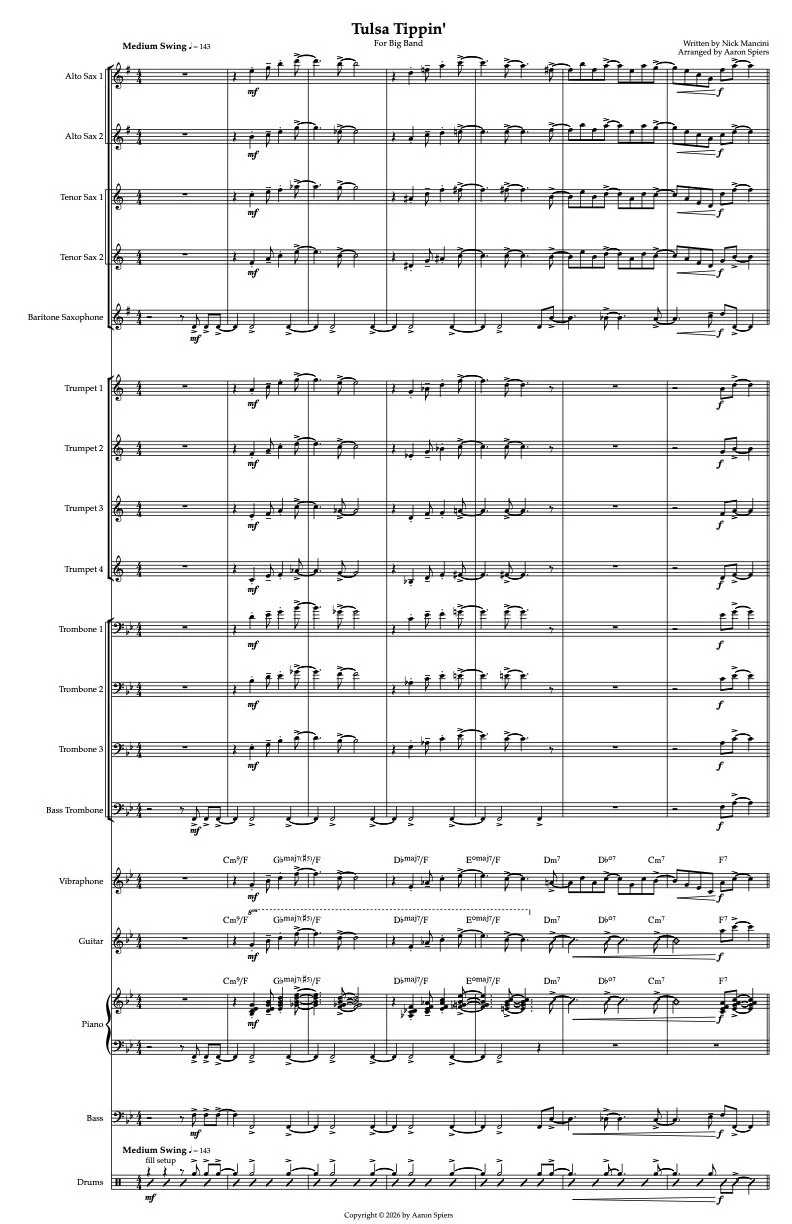 Image 2 of 7
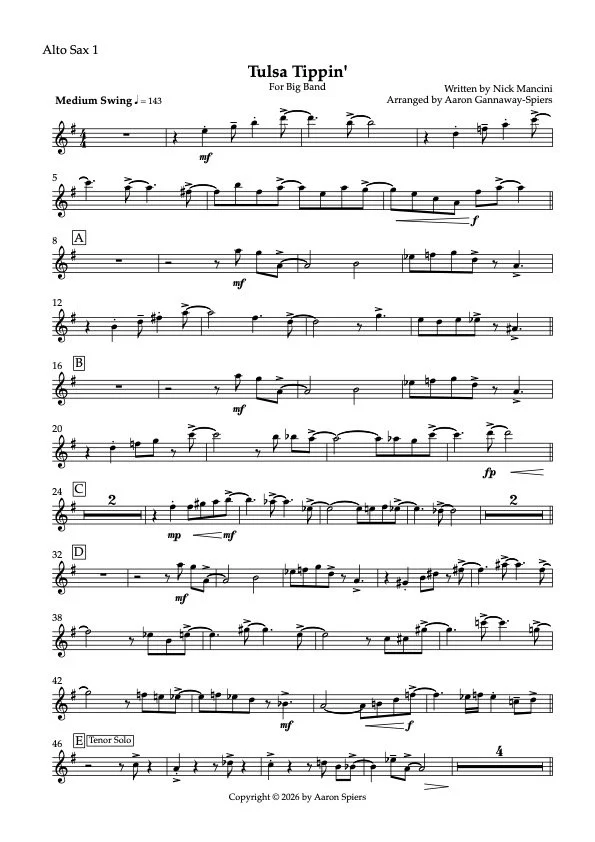 Image 3 of 7
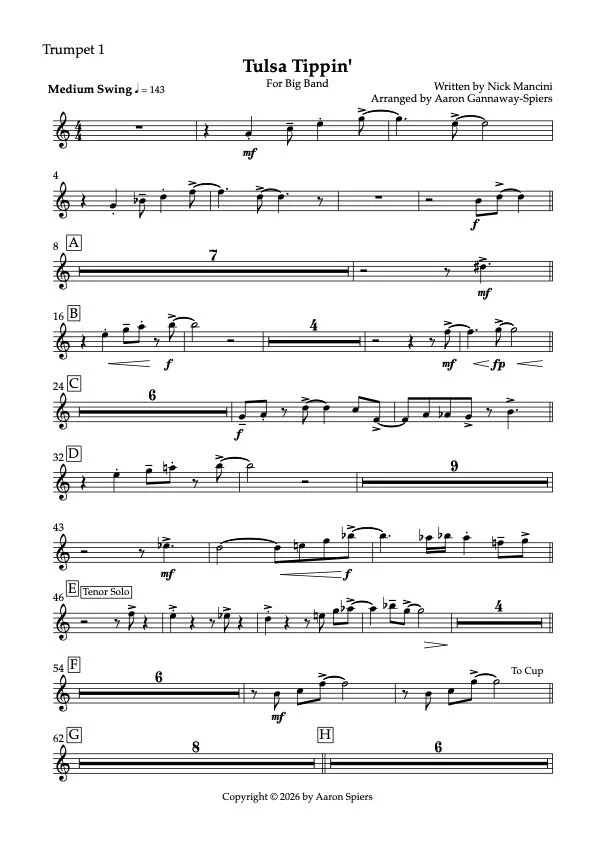 Image 4 of 7
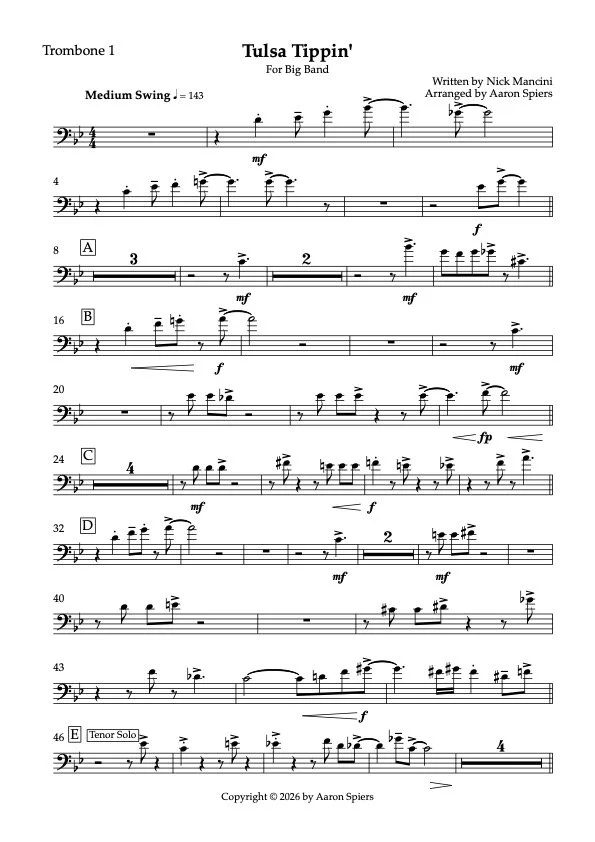 Image 5 of 7
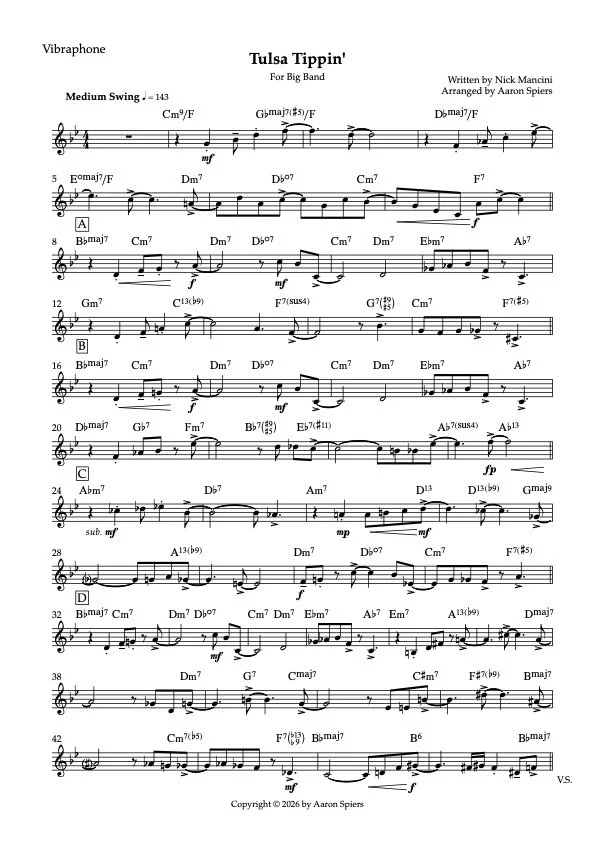 Image 6 of 7
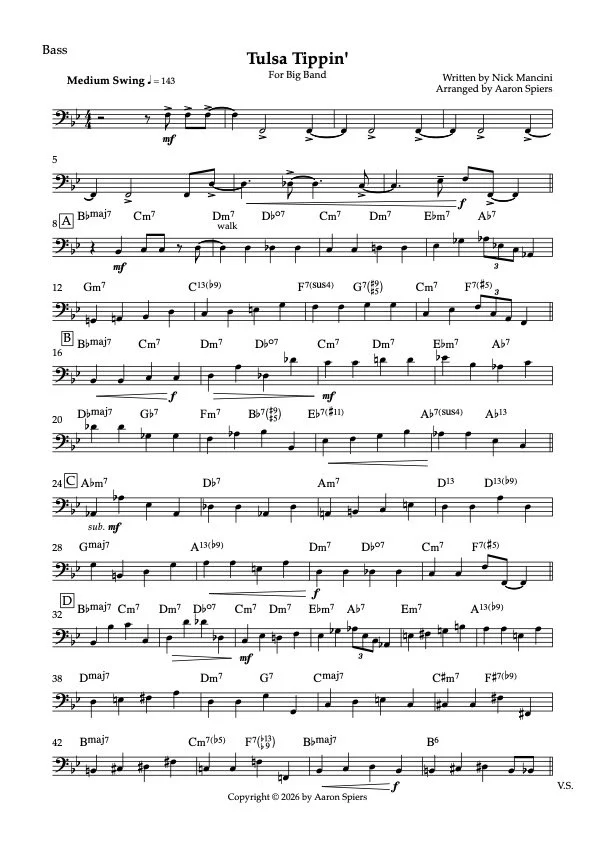 Image 7 of 7