 Image 1 of 1
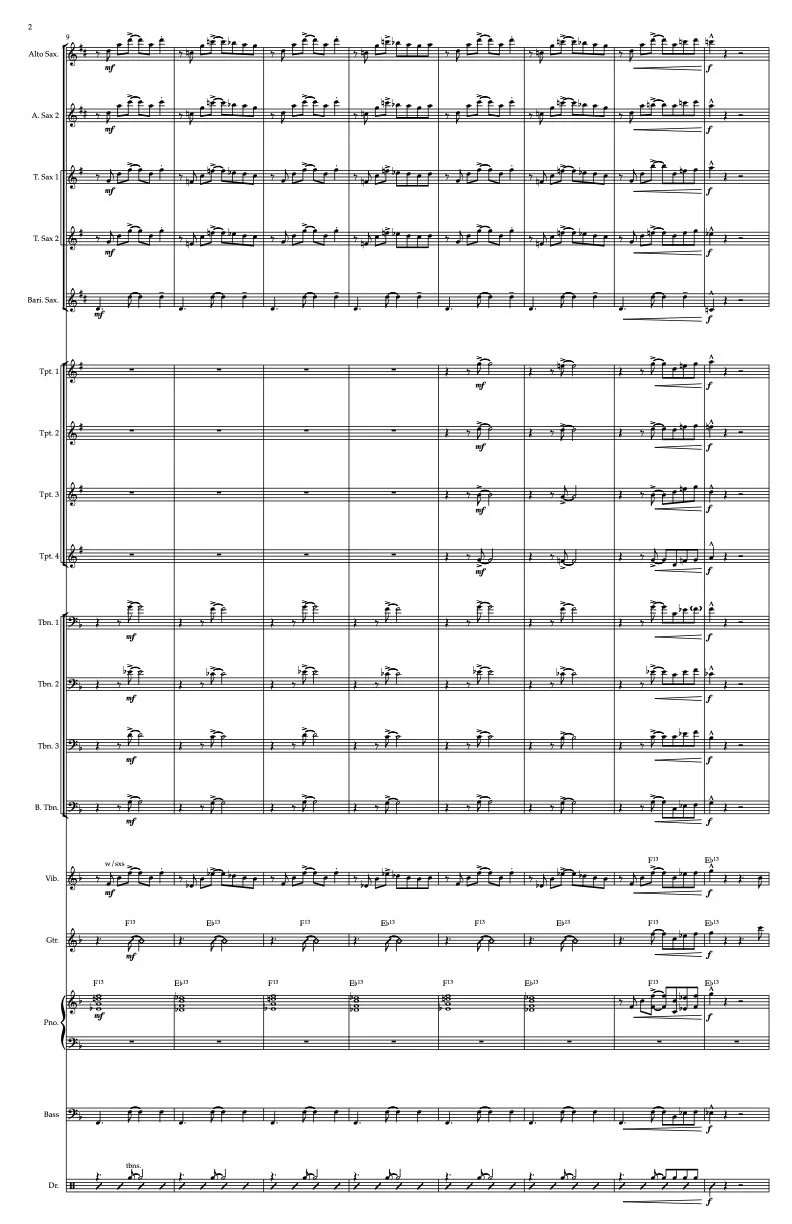
Written as a tribute to the vibrant jazz community of Tulsa, Oklahoma, Tulsa Tippin' is a medium swing composition that combines the language of the classic jazz orchestra with contemporary harmonic movement and modern orchestration. Built around a simple but memorable melody, the work embraces the conversational nature of the big band, allowing each section of the ensemble to contribute to the musical narrative while maintaining the relaxed energy and forward momentum of a traditional swing chart.
The composition follows a classic jazz orchestra form of Intro, Head, Tenor Saxophone Solo, Vibraphone Solo, Saxophone Soli, Head Out, balancing opportunities for improvisation with carefully developed ensemble writing. The principal melody is passed organically between the vibraphone, saxophones, trombones, and trumpets, creating continual changes in orchestral colour while maintaining a strong sense of thematic unity.
At the heart of the arrangement is an extended saxophone soli inspired by the writing of Thad Jones. Rather than functioning simply as a technical showcase, the soli serves as the dramatic climax of the work, demonstrating the expressive possibilities of the saxophone section through fluid voice leading, intricate counterpoint, and unified ensemble phrasing before the full orchestra returns for the final statement of the theme.
Although harmonically adventurous, the melodic material remains intentionally direct, encouraging performers to focus on phrasing, articulation, and the subtle art of "laying back" within the swing feel. The score emphasizes clarity of ensemble interaction over virtuosic display, allowing the rhythm section and horns to develop a cohesive, relaxed groove while supporting the featured soloists.
This study score provides insight into contemporary approaches to medium swing writing, sectional orchestration, motivic development, and modern harmonic language within the traditional big band idiom. It demonstrates how melodic simplicity, evolving orchestration, and dynamic pacing can be combined to create a work that is both firmly rooted in the jazz tradition and representative of the modern jazz orchestra.
Written as a tribute to the vibrant jazz community of Tulsa, Oklahoma, Tulsa Tippin' is a medium swing composition that combines the language of the classic jazz orchestra with contemporary harmonic movement and modern orchestration. Built around a simple but memorable melody, the work embraces the conversational nature of the big band, allowing each section of the ensemble to contribute to the musical narrative while maintaining the relaxed energy and forward momentum of a traditional swing chart.
The composition follows a classic jazz orchestra form of Intro, Head, Tenor Saxophone Solo, Vibraphone Solo, Saxophone Soli, Head Out, balancing opportunities for improvisation with carefully developed ensemble writing. The principal melody is passed organically between the vibraphone, saxophones, trombones, and trumpets, creating continual changes in orchestral colour while maintaining a strong sense of thematic unity.
At the heart of the arrangement is an extended saxophone soli inspired by the writing of Thad Jones. Rather than functioning simply as a technical showcase, the soli serves as the dramatic climax of the work, demonstrating the expressive possibilities of the saxophone section through fluid voice leading, intricate counterpoint, and unified ensemble phrasing before the full orchestra returns for the final statement of the theme.
Although harmonically adventurous, the melodic material remains intentionally direct, encouraging performers to focus on phrasing, articulation, and the subtle art of "laying back" within the swing feel. The score emphasizes clarity of ensemble interaction over virtuosic display, allowing the rhythm section and horns to develop a cohesive, relaxed groove while supporting the featured soloists.
This study score provides insight into contemporary approaches to medium swing writing, sectional orchestration, motivic development, and modern harmonic language within the traditional big band idiom. It demonstrates how melodic simplicity, evolving orchestration, and dynamic pacing can be combined to create a work that is both firmly rooted in the jazz tradition and representative of the modern jazz orchestra.