 Image 1 of 3
Image 2 of 3
Image 1 of 3
Image 2 of 3
 Image 3 of 3
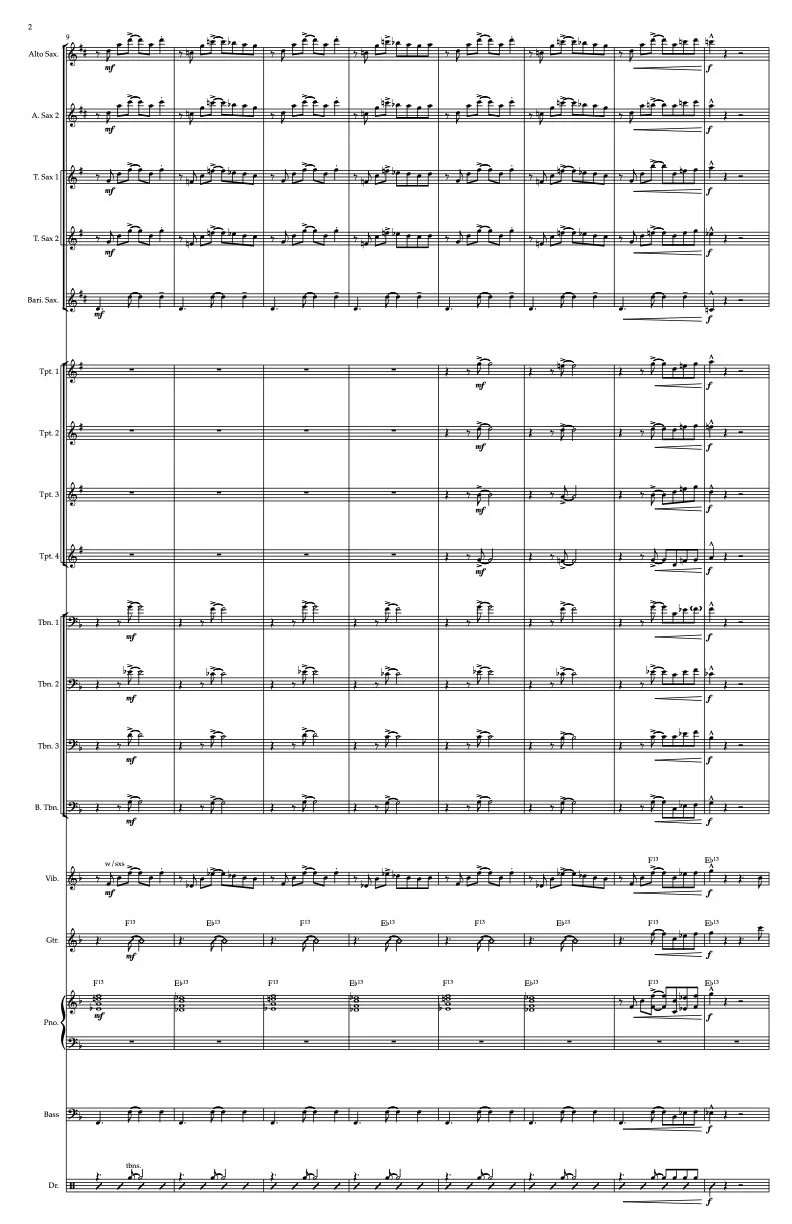
Written following Aaron Spiers' first collaboration with acclaimed vibraphonist Nick Mancini, Vibe O'Clock Somewhere is a contemporary jazz orchestra work that celebrates the expressive and rhythmic possibilities of the vibraphone within the modern big band. Playfully referencing the phrase "It's beer o'clock somewhere," the composition combines an infectious straight-eighth groove with colourful orchestration, modern harmonic language, and a strong emphasis on ensemble interaction.
The work follows a clear formal design of Intro, Head, Vibraphone Solo, Interlude, Alto Saxophone Solo, Shout Chorus, Head Out, and Outro, balancing accessibility with continually evolving orchestral textures. Throughout the composition, the vibraphone serves as both the principal melodic voice and featured improviser, often sharing melodic responsibilities with the guitar while the surrounding ensemble provides transparent accompaniment.
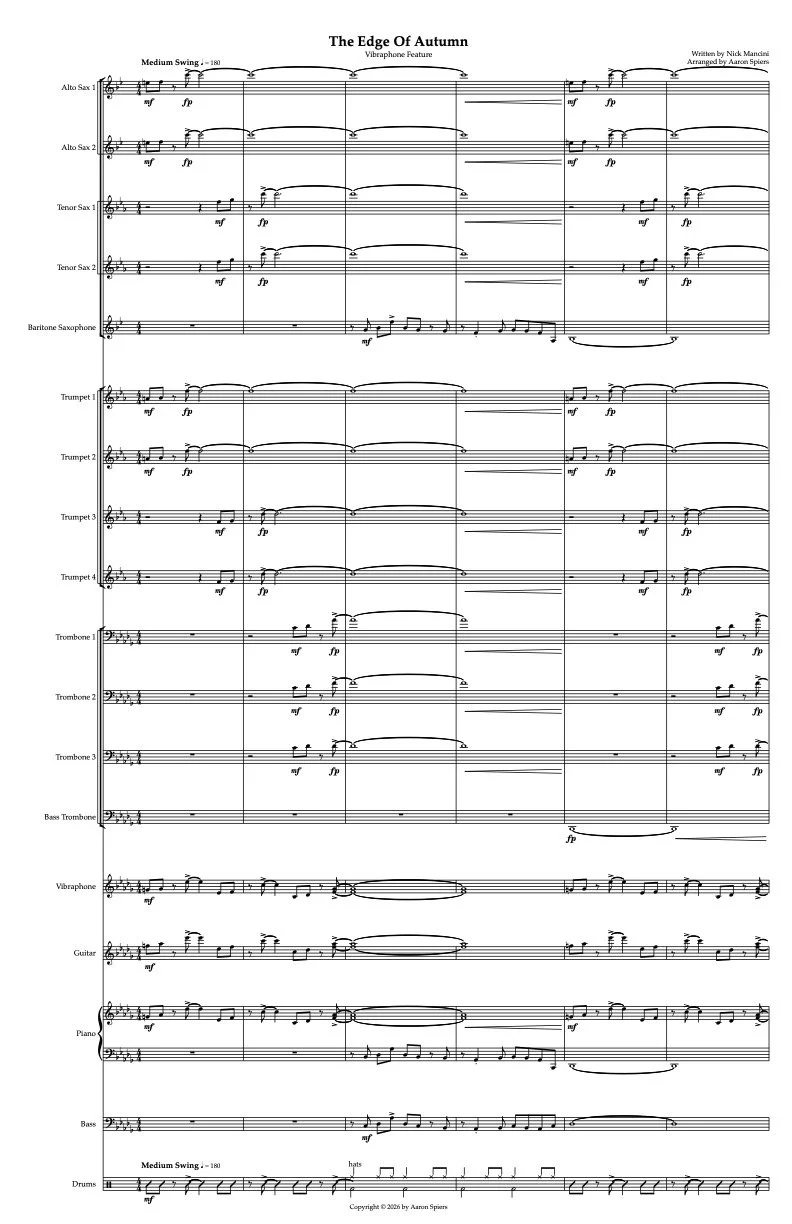
Rather than relying on dense orchestration, the score frequently contrasts chamber-like textures with full ensemble statements. A brief saxophone soli acts as a transitional device, leading into an atmospheric alto saxophone improvisation before the arrangement builds toward its climactic shout chorus. Here, the lower voices are set in opposition to the upper ensemble, creating a dramatic dialogue that gradually expands into a full-orchestra conclusion.
The harmonic language reflects a contemporary jazz aesthetic while remaining grounded in strong melodic writing and rhythmic momentum. Careful attention is given to orchestral balance, particularly in supporting the vibraphone, whose relatively delicate timbre remains central to the character of the work.
This study score demonstrates approaches to writing for featured solo instruments within the jazz orchestra, contemporary straight-eighth groove composition, sectional orchestration, and the effective use of contrast between intimate chamber textures and full ensemble writing. It also illustrates how melodic clarity, orchestral colour, and rhythmic drive can combine to create a cohesive and engaging large ensemble composition.
Written following Aaron Spiers' first collaboration with acclaimed vibraphonist Nick Mancini, Vibe O'Clock Somewhere is a contemporary jazz orchestra work that celebrates the expressive and rhythmic possibilities of the vibraphone within the modern big band. Playfully referencing the phrase "It's beer o'clock somewhere," the composition combines an infectious straight-eighth groove with colourful orchestration, modern harmonic language, and a strong emphasis on ensemble interaction.
The work follows a clear formal design of Intro, Head, Vibraphone Solo, Interlude, Alto Saxophone Solo, Shout Chorus, Head Out, and Outro, balancing accessibility with continually evolving orchestral textures. Throughout the composition, the vibraphone serves as both the principal melodic voice and featured improviser, often sharing melodic responsibilities with the guitar while the surrounding ensemble provides transparent accompaniment.
Rather than relying on dense orchestration, the score frequently contrasts chamber-like textures with full ensemble statements. A brief saxophone soli acts as a transitional device, leading into an atmospheric alto saxophone improvisation before the arrangement builds toward its climactic shout chorus. Here, the lower voices are set in opposition to the upper ensemble, creating a dramatic dialogue that gradually expands into a full-orchestra conclusion.
The harmonic language reflects a contemporary jazz aesthetic while remaining grounded in strong melodic writing and rhythmic momentum. Careful attention is given to orchestral balance, particularly in supporting the vibraphone, whose relatively delicate timbre remains central to the character of the work.
This study score demonstrates approaches to writing for featured solo instruments within the jazz orchestra, contemporary straight-eighth groove composition, sectional orchestration, and the effective use of contrast between intimate chamber textures and full ensemble writing. It also illustrates how melodic clarity, orchestral colour, and rhythmic drive can combine to create a cohesive and engaging large ensemble composition.